The roots of a heritage to be protected and preserved
Erica e Stefano Verona tell the story of the La Scogliera estate, afamily-run winery that has been preserving a centuries-old vine on the island of Sant'Antioco for five generations. Through their sustainable approach rooted in tradition, they aim to enhance the territory through wine and wine tourism, keeping alive the agronomic techniques of the past and promoting local culture.
Presentation
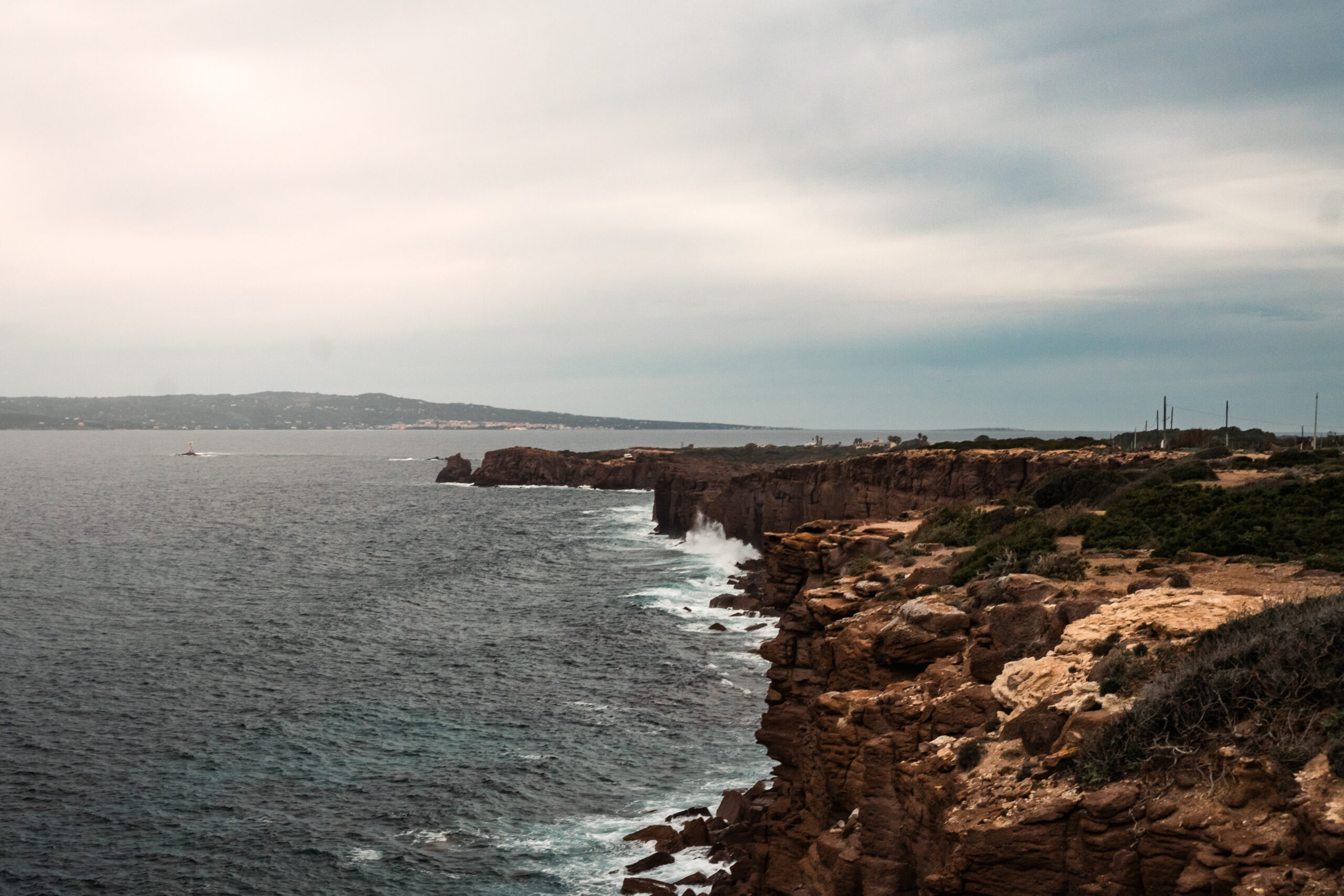
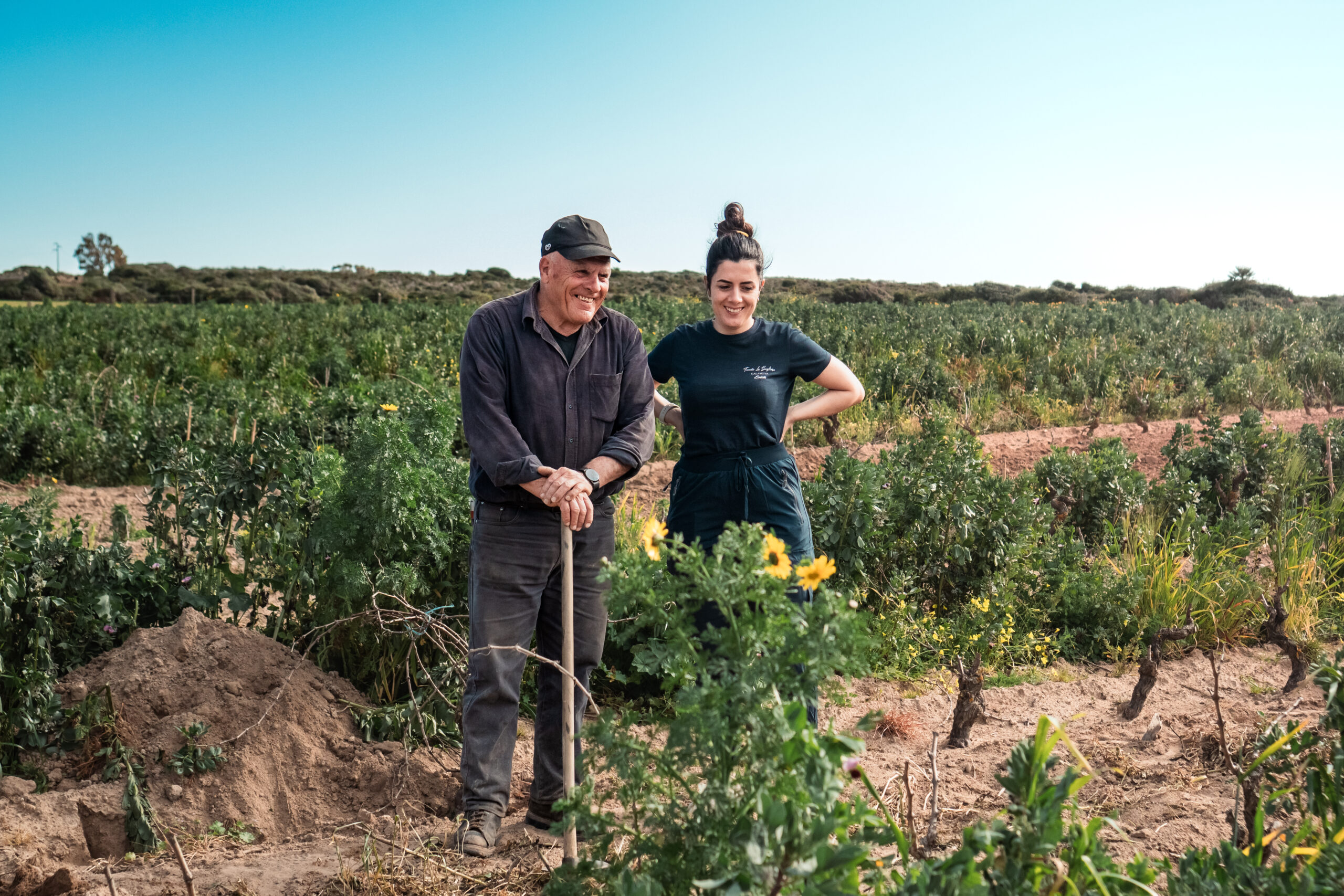
EricaMy name is Erica Verona, and together with my father Stefano, who is also the agronomist of our vineyards, we are Tenuta La Scogliera, a family business that has now existed for five generations. We have inherited from our grandparents, passing through great-grandparents and so on, a vine that is a hundred years old and must be preserved. We are striving to make our heritage and our cultural heritage known and disseminated throughout the world. We are trying to run a project to safeguard the territory and our traditions. In fact, the logo of our wine 'Raixe', which means 'roots' in Italian, is intended to preserve the Tabarchino dialect. We are located on the island of Sant'Antioco and our vine is practically on the edge of a cliff overlooking the sea; thus, we have named our company 'Tenuta La Scogliera' and since our roots are very old, our name and logo refer to our roots, the roots of our family'.
StefanoIt also refers to the winegrowing tradition, i.e. the roots of the Piede Franco, which we have preserved and have never 'polluted' with grafts of American vine roots. Not a branch of American vine has ever entered our company."
EricaThis is our project and we want to take it forward in terms of wine tourism, so we want to succeed in entering the world of wine tourism in its entirety, so that as many people as possible, as many connoisseurs of the island, can, through wine, through a visit to the vineyard and through our stories, get right to the heart of what is the history of the vine, the history of the island in terms of wine and as a heritage not to be lost, despite the fact that it is not very fruitful and also in a certain sense not very rewarding.
Tell us about the agronomic techniques you use in your vineyards
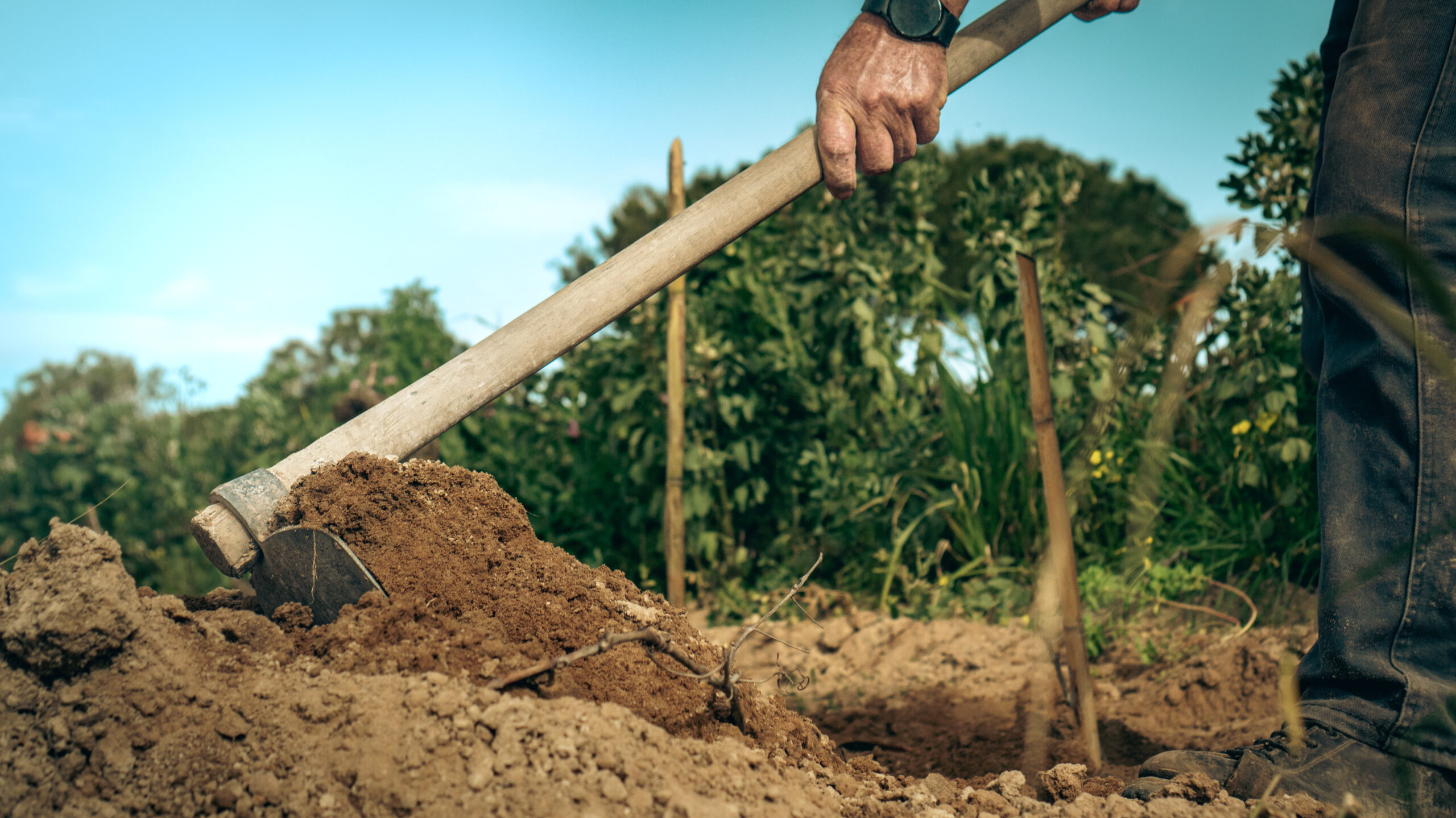
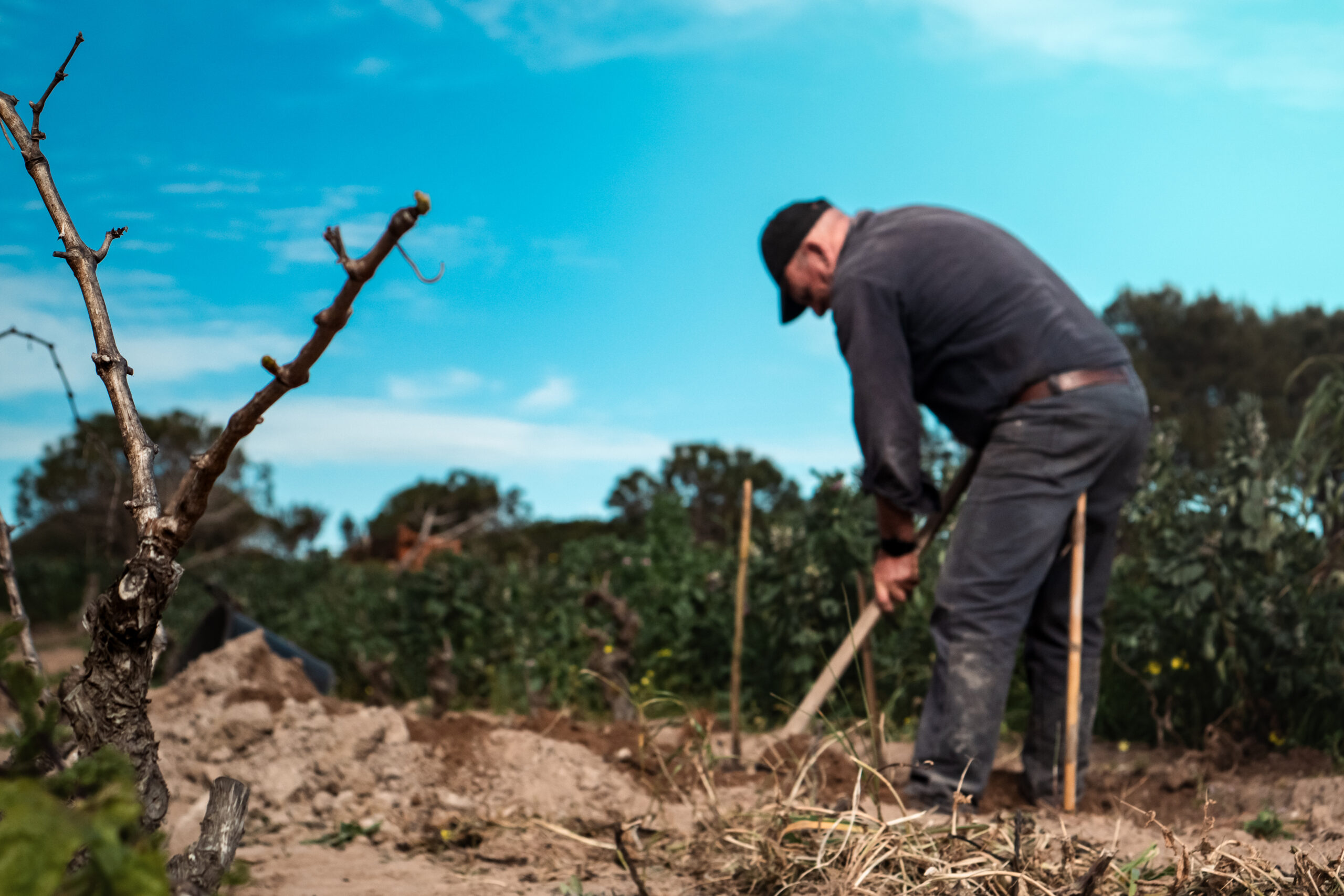
StefanoOur working method is as faithful as possible to the land. As far as the agronomic techniques used are concerned, we have tried to maintain the old traditions in their entirety. Obviously the tillage that used to be carried out using, for example, animal traction, is no longer compatible from an economic point of view, so we use motorised tractors, taking care to use tractors with a low environmental impact and therefore taking care of all exhausts to minimise emissions. In the area of working and fertilising, we are against chemical fertilisation, so much so that it is not done on our farm, but we use natural fertilisers: mature manure, which today is also becoming quite difficult to find, whereas in my father's time, of course, it was easier, having a cattle farm next door.
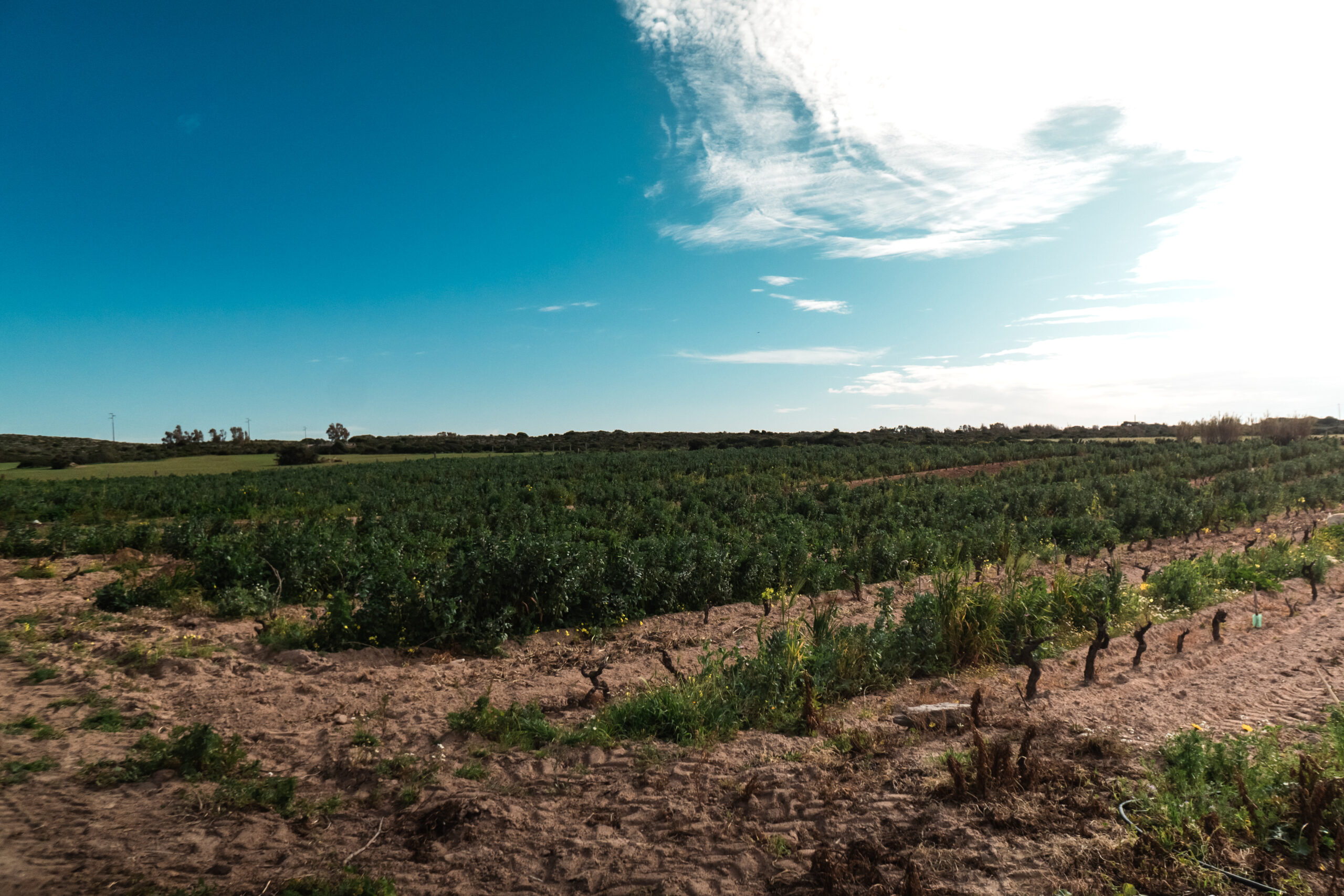
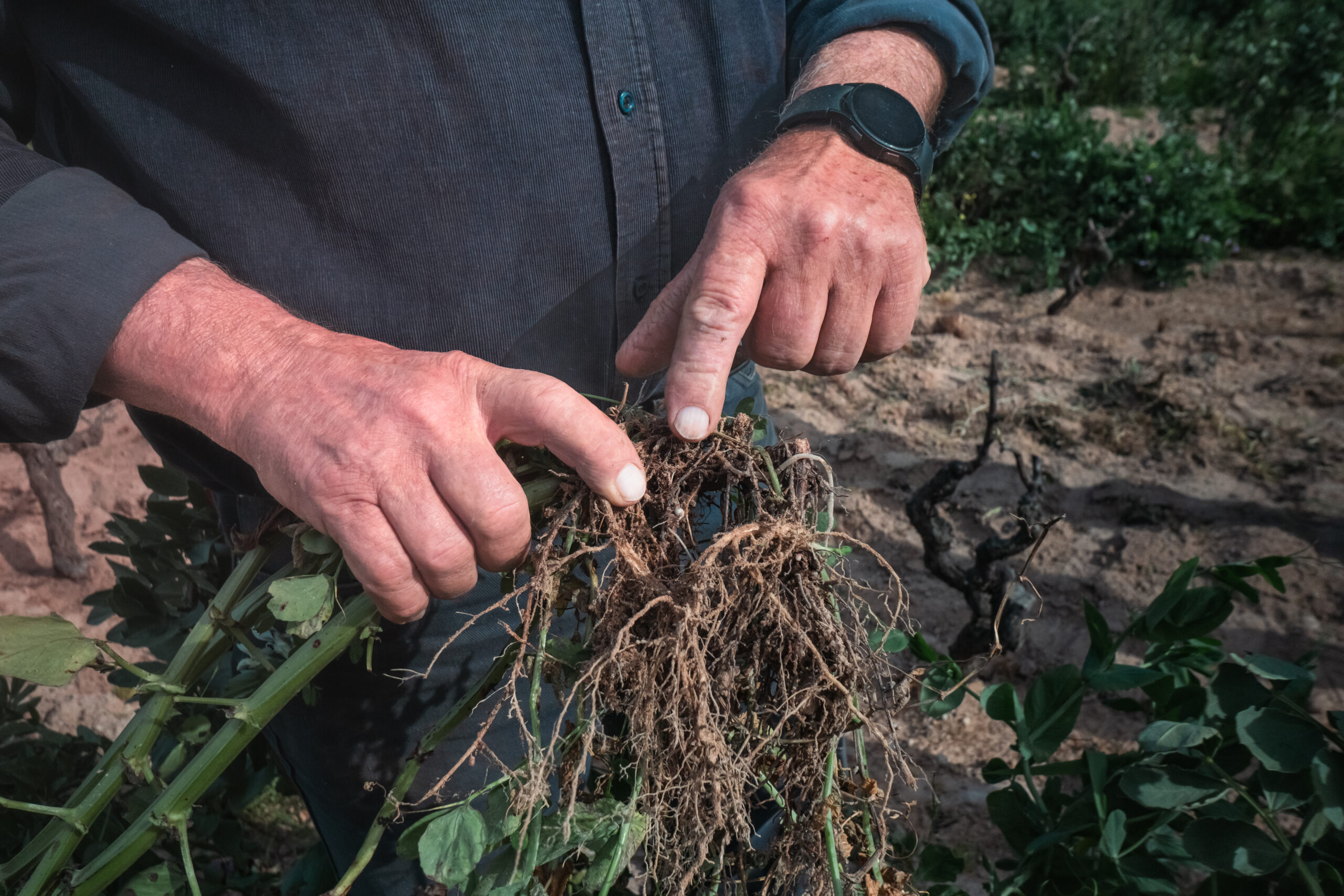
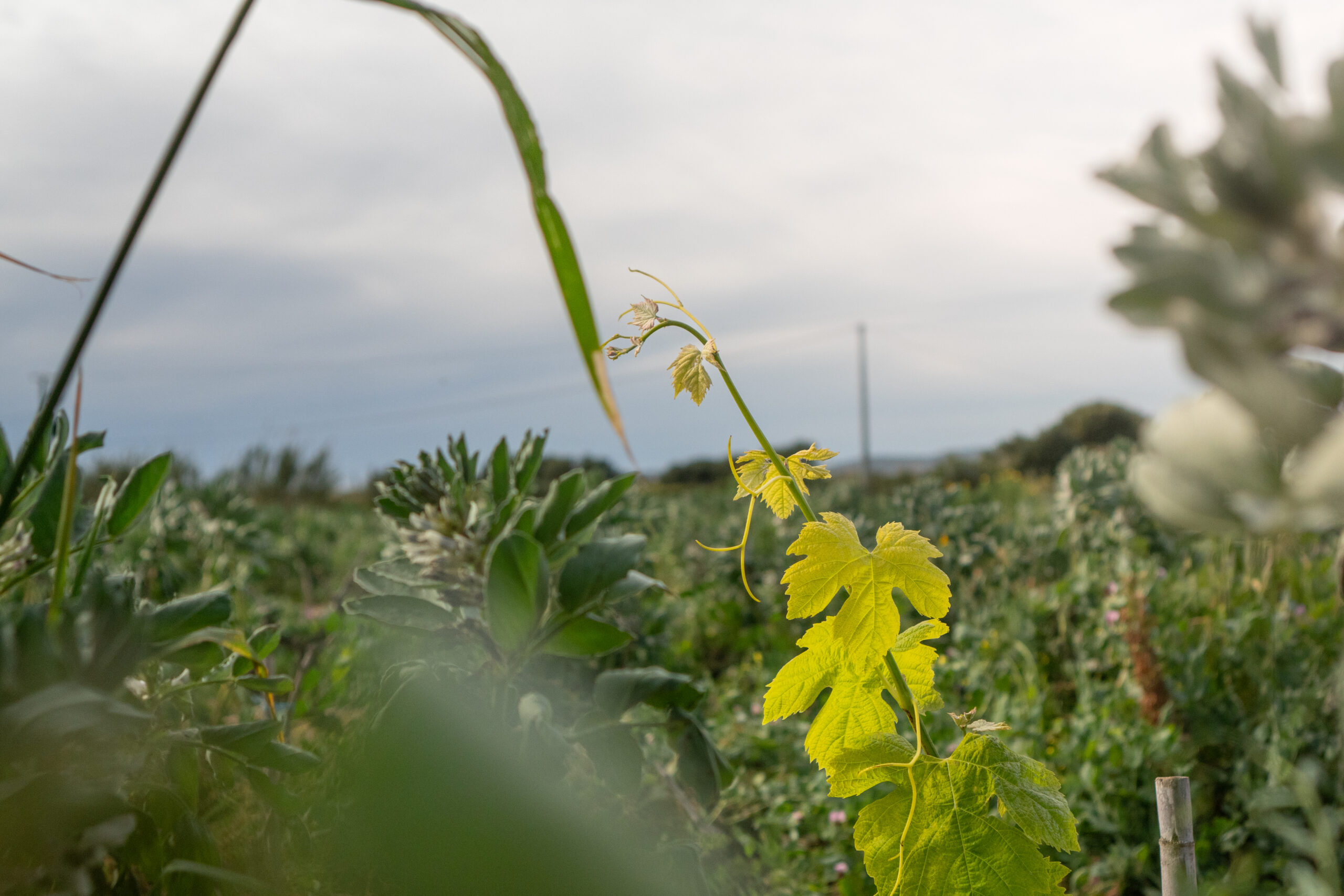
As far as nitrogen fertilisation is concerned, I use the green manure technique: at the end of November I sow leguminous plants, which are known to be nitrogen-fixing plants, i.e. they capture atmospheric nitrogen and incorporate it into their root tubercles and then slowly release it to the vine. Green manure is a practice that consists precisely of grinding, shredding and burying Favino, in this case. Leguminous plants, particularly at peak flowering time, have accumulated the most nitrogen within the root tubercles."
Tell us about the strategies you adopt to protect your vines from the most common diseases
StefanoFor the treatment of the main plant diseases, we are talking about powdery mildew and downy mildew, we try to use organic products: for powdery mildew we basically use sulphur, while for downy mildew, which, as a very harmful fungus, affects and annihilates production especially in very wet years, we have found an excellent clay, Cuban zeolite, which we spray on the vegetation and which is able to absorb water, drying the leaves quickly. Zeolite also gives us a big hand because it deters vine-damaging insects: they are distracted by the clay, which gives the vine leaves a special glow and keeps the insects from attacking."
What techniques do you use to replace plants in a 100-year-old vineyard?
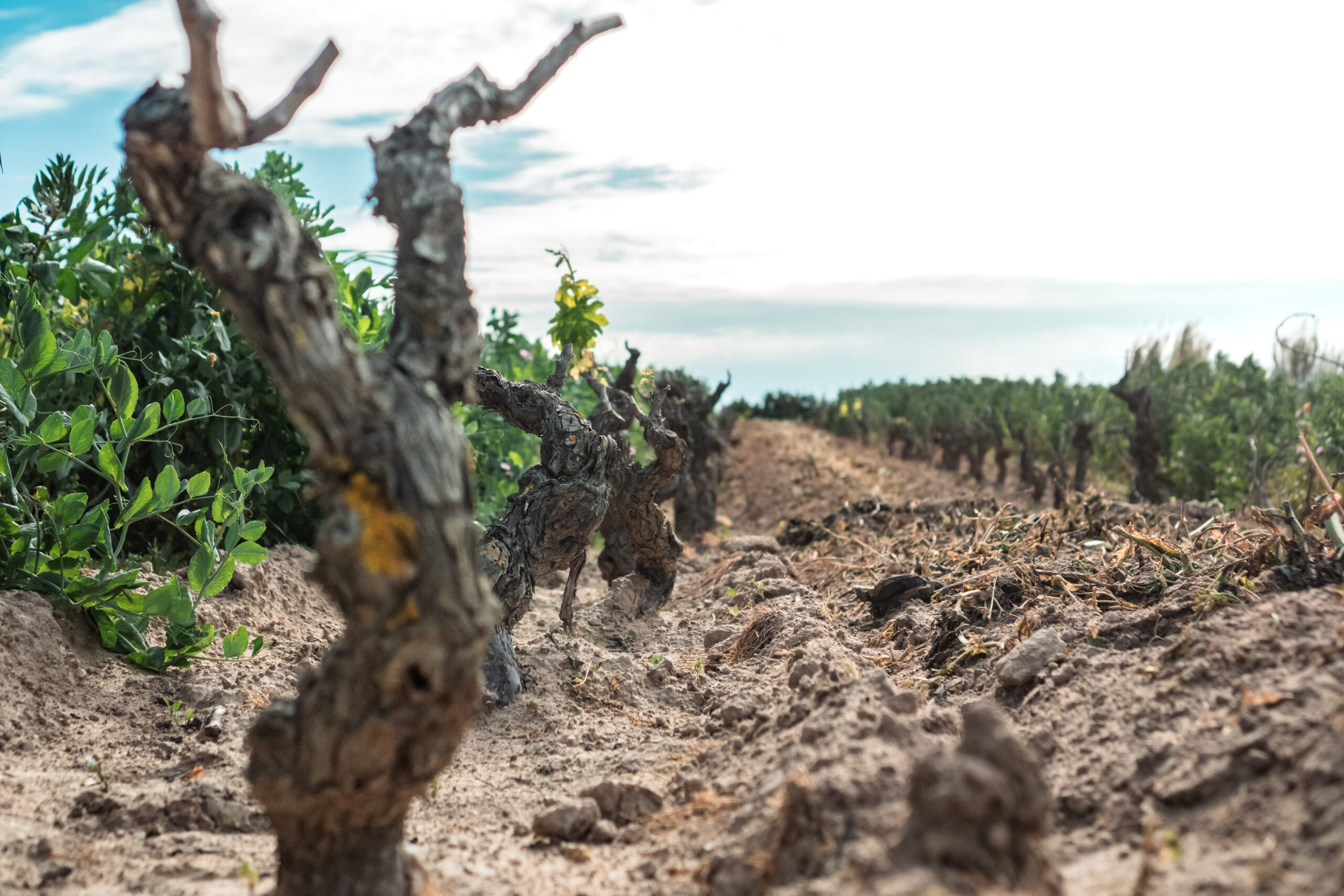
StefanoWe use 'old' practices, such as the traditional offshoot: what in Sant'Antioco they call 'Fundu Croccau', in our Tabaro dialect we call it 'abbatte fundi'. This really means felling, i.e. laying the entire stump in a deep ditch and making shoots emerge from this stump where there were failures. The failures (absence of plants) in a 100-year-old vineyard are there because some plants obviously die, some plants, on the other hand, are uprooted by accidents with mechanical means and therefore need to be replaced. To replace plants, many use the 'trappe', which consists of taking a shoot from the mother plant, burying it and bringing it up where the plant is missing. There we have an old plant and a young plant together, whereas we prefer to do 'Abbatte fundi' or 'Fundu Croccau' so that we have two or three completely young plants on old roots. This is a technique learned from our ancestors that works very well, so much so that these shoots already produce from the first year and the mother plant is practically not exploited because it is completely buried."
What are the future plans?
EricaAs far as the company's future plans are concerned, certainly investing in the territory and making the wine heritage that the island of Sant'Antioco has to offer known to the world as much as possible. We have a heritage that will soon be recognised much greater than it is now: there are even those who speak of Unesco recognition. For now, it is enough for people who come to visit us to know that the territory of the island of Sant'Antioco offers a wine heritage that has nothing to envy to all the great wine tourism phenomena that exist in other regions. We constitute a heroic wine-growing agriculture because we are on an island. We also count a lot on investing in wine tourism so that people can get to know us from an oenological point of view. You travel through the bottle and through the goblet for sure, but the knowledge of where that goblet comes from, the history and the care of the vine is also very important."
What are childhood memories and past memories?
EricaThe memory of the past, I also associate it very much with this part I am telling you about my future project: there is no future if there is no past. In my specific case, I have a completely different degree and I have studied a completely different thing in my life, but it's really a question of affection: 'why did my grandparents and my dad work so hard to get here and I should sell everything and send all the sacrifices up in smoke? It's a shame. They put a lot of effort, precisely because they were doing other jobs, to be able to keep this company going, and so I feel a sort of responsibility, really an emotional one, because losing all this would be a real shame in terms of territorial and family assets. My memory is this: my dad, who from the time I was little, instead of taking me to the piazzetta to play took me here, to the vineyard, he showed me the vines there, the animals, there was the horse. It's a memory linked to my childhood'.
StefanoI have so many memories, but right now my memory is my father. I have a photo with my father here, sitting right where we are sitting now, with the Mangiabarche lighthouse behind us, in one of the few moments we used to allow ourselves when we were working in the vineyard. We used to come here, take a bath and go down the cliff: if you tell people that we used to go down here, no one would believe it. My father is the person who passed on the passion to me because he took me with him from a very young age: when I was three or four years old, I would go with him to the vineyard and I wanted to do all the things he did, even though, of course, I couldn't. The passion he passed on to me meant that I also went on to study agriculture and so it was his greatest satisfaction when I graduated as a doctor of agronomy. The other wonderful memory is the day my daughter told me 'Papi, I want to be a bottle': there I realised that I had managed, after so many years, to pass on to my daughter what my father had passed on to me. So we always go back there, to the roots of the past and the roots I hope will remain in the future."
Scopri di più sulla Tenuta La Scogliera!
Vieni a visitarla: lasciati incantare da vino e tramonto!