For decades, the Carignano grape harvest has been a fundamental social ritual for the community of Sant'Antioco, an island historically devoted to wine-growing well before the advent of cooperative wineries.
The island's symbolic vine and oenological heritage is the Carignano del Sulcis, cultivated exclusively free-range thanks to the sandy soils that protect the vines from phylloxera and create an ideal substrate for high quality production.
Grape harvest: between celebration and work
On the island, the traditional grape harvest has always been synonymous with festivity: from the manual harvest in the vineyards of enthusiasts and hobbyists, which become occasions for conviviality and large lunches with friends and relatives, to private and social enterprises, for which the grape harvest represents a period of intense work, decisive for the year's performance. Even in the largest wineries, the harvest is celebrated with convivial moments between employees to celebrate the results achieved.
Traditional Method and Grape Quality
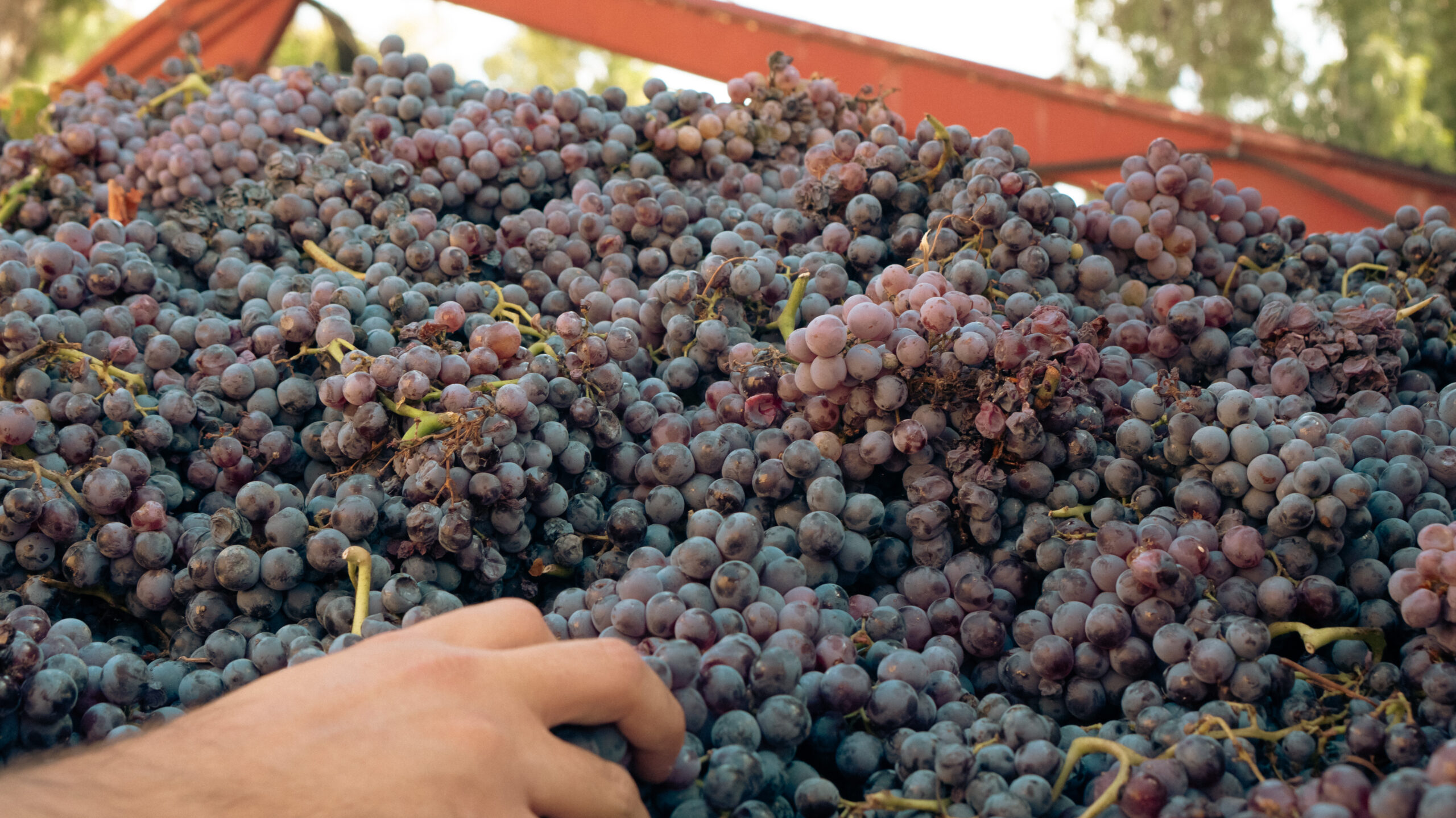
The harvest in Sant'Antioco is still carried out manually, both out of respect for tradition and for the conditions of the vineyards with very narrow hilaries that do not allow mechanisation. This respect for tradition, even if it makes the work more laborious, guarantees healthier and higher quality grapes, fundamental for the island's typical wines.
The community's link with viticulture
The strong community participation confirms the extent to which vine-growing in Sant'Antioco is rooted in the territory and in the collective memory: almost all the inhabitants remember the festive atmosphere associated with the grape harvest from childhood.
Climate Change and Harvest Anticipation
Today, due to climate change, there has been a noticeable contraction in harvest dates, which, in the last decade, has led to the harvest starting as early as the first days of September.
Vintage 2025: early ripening and high quality
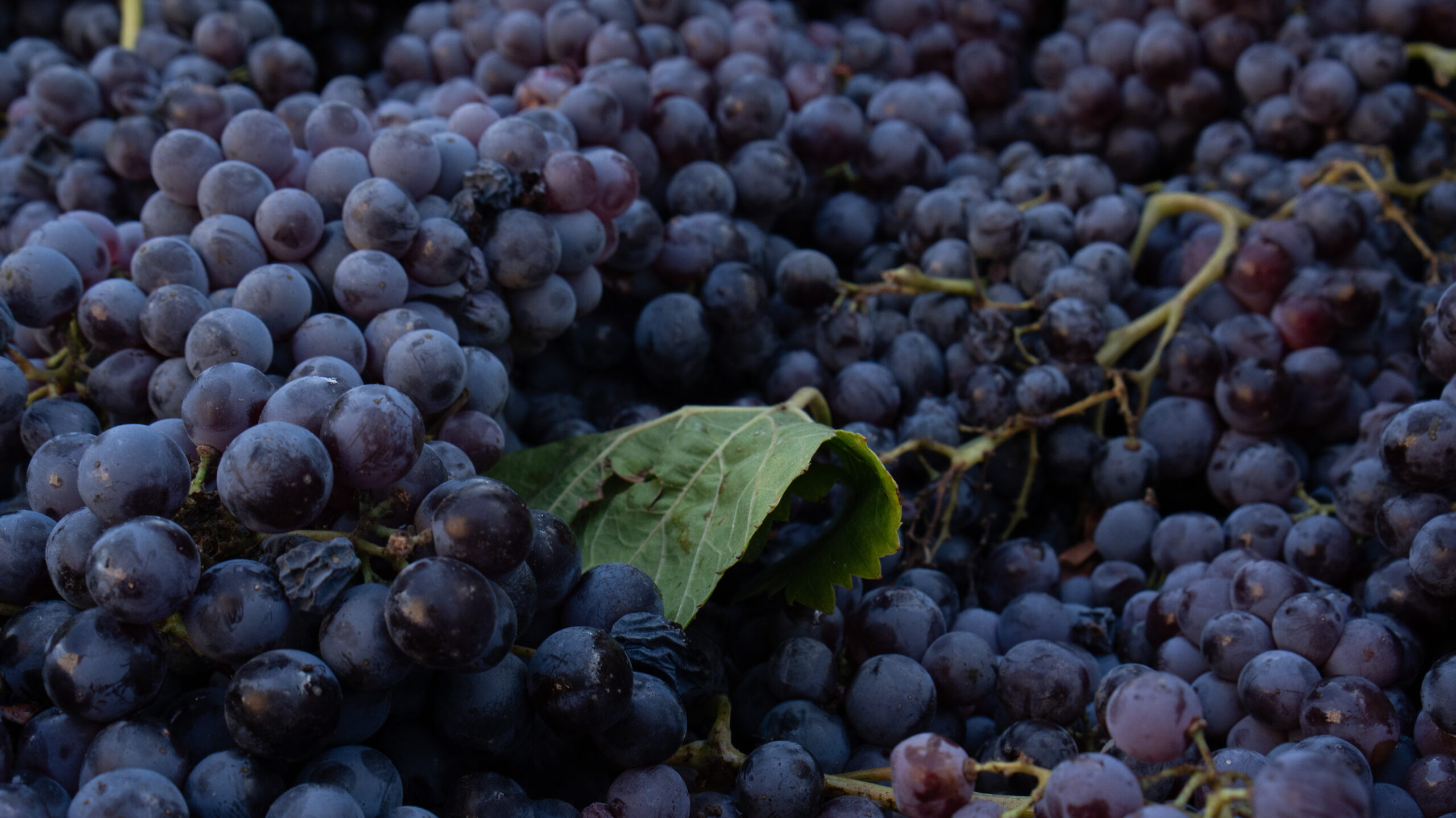
In the current vintage, which was particularly hot and dry in June and July, the grapes ripened early in August. The significant temperature fluctuations in August favoured the concentration of sugars and phenolic ripening, guaranteeing very high quality grapes despite a lower yield. This situation resulted in an excellent polyphenolic concentration, making the vintage particularly suitable for the production of fine ageing wines.
Giovanni Salidu and Roberto Matzeu