Presentation
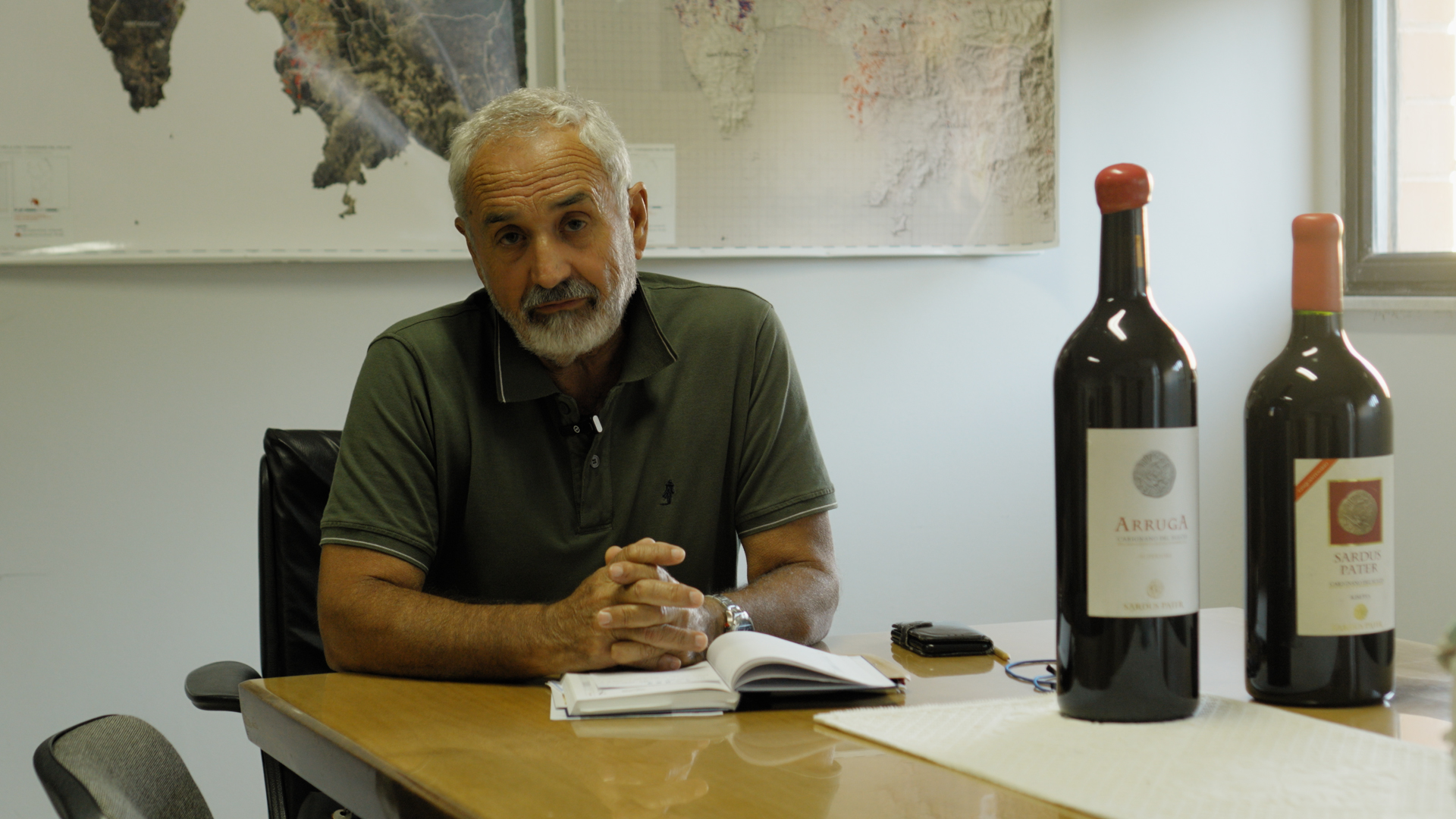
My name is Raffaele De Matteis and I am president of the board of directors of the Sant'Antioco Cooperative Agricultural Cooperative Cantina Sociale di Sant'Antioco, or Cantine Sardus Pater.
I have been on the board since 2004 and, after a period of particular crisis, we are currently working reasonably well.
Origins and characteristics of the winery
Our winery was founded in 1949, with the same grapes that are still today conferred by the members. We work mainly with Carignano, particularly in Sant'Antioco, where it is cultivated on free-range in sandy soils.
The Sant'Antioco members are more than half of the winery's total membership, because the DOC Carignano del Sulcis covers the entire Sulcis area, from the municipality of Carbonia to Teulada. The regulations require that Carignano wine be grown, processed and aged in its place of origin, so it cannot be produced outside that area.
The birth of the cooperative and the bulk wine market
The winery was founded by a dozen members who had vineyards but were unable to process or market their product. So they decided to create a cooperative to expand the market and enhance the Sulcis territory.
Initially, until 1978-79, only blending wine was produced, shipped to France to improve the colour and gradation of French wines. Carignano in fact has a very intense red colour. This allowed the winery to grow to more than 1,000 members with annual deliveries of between 150 and 170 thousand quintals of grapes.
The bulk wine crisis and the uprooting of vineyards
With the change in the French market, which began to use sugar to correct their musts, the demand for bulk wine collapsed. This caused a drastic drop in production at Sant'Antioco and the consequent incentive to uproot vineyards, with premiums of up to 15 million lire per hectare and a commitment not to replace them for 14 years. So many members abandoned cultivation and the characteristic 'immense flower garden of vines' on the island disappeared.
The difficult transition to bottle sales
After the collapse of the bulk wine market and an initial attempt to sell the product in Italy, the winery suffered a sharp drop in sales. Unfortunately, the lack of a clear strategy and proper organisation on the part of the technicians and administrators slowed down the bottling process and the direct marketing of the wine.
The turning point since 2004 with oenologist Riccardo Cotarella
Since 2004, with the new board of directors, we have started a collaboration with the well-known Italian oenologist Dr Riccardo Cotarella. Thanks to him, we started to directly process the wine and bottle it, starting with the grapes of Sant'Antioco.
The unique characteristics of Sant'Antioco grapes
Our grapes are grown on a free-range basis, with vines that are on average between 70 and 80 years old and some plants that are over 100 years old. Production is low (35-40 quintals per hectare against the 110-120 required by the specifications), but the quality is very concentrated and optimal for marketing.
Modern production and the distinction of the Carignano lines
Since 2004 we have started an automatic bottling system and today we produce over 100 thousand bottles.
The winery has chosen to separate the production: the 90% in the Sant'Antioco vineyards is free-range, while the rest of Sulcis, with the espalier system on American vines, has higher yields.
This division is very popular because free-range wines have special characteristics, which are in high demand even during the current market crisis.
Markets and future prospects
Our wine reaches the whole world, America, Asia and Northern Europe. About 25% of the bottles go to markets outside the EU, 20% to Europe, and the rest to Sardinia and Italy.
We exceed 500,000 bottles and could grow further if red wine consumption recovers.