Listen to the sound of the sea that brought great navigators of the ancient Mediterranean from the East to the island, including the Phoenicians, who founded on the island one of the oldest cities in the central-western Mediterranean.
STAGE 1
MAB
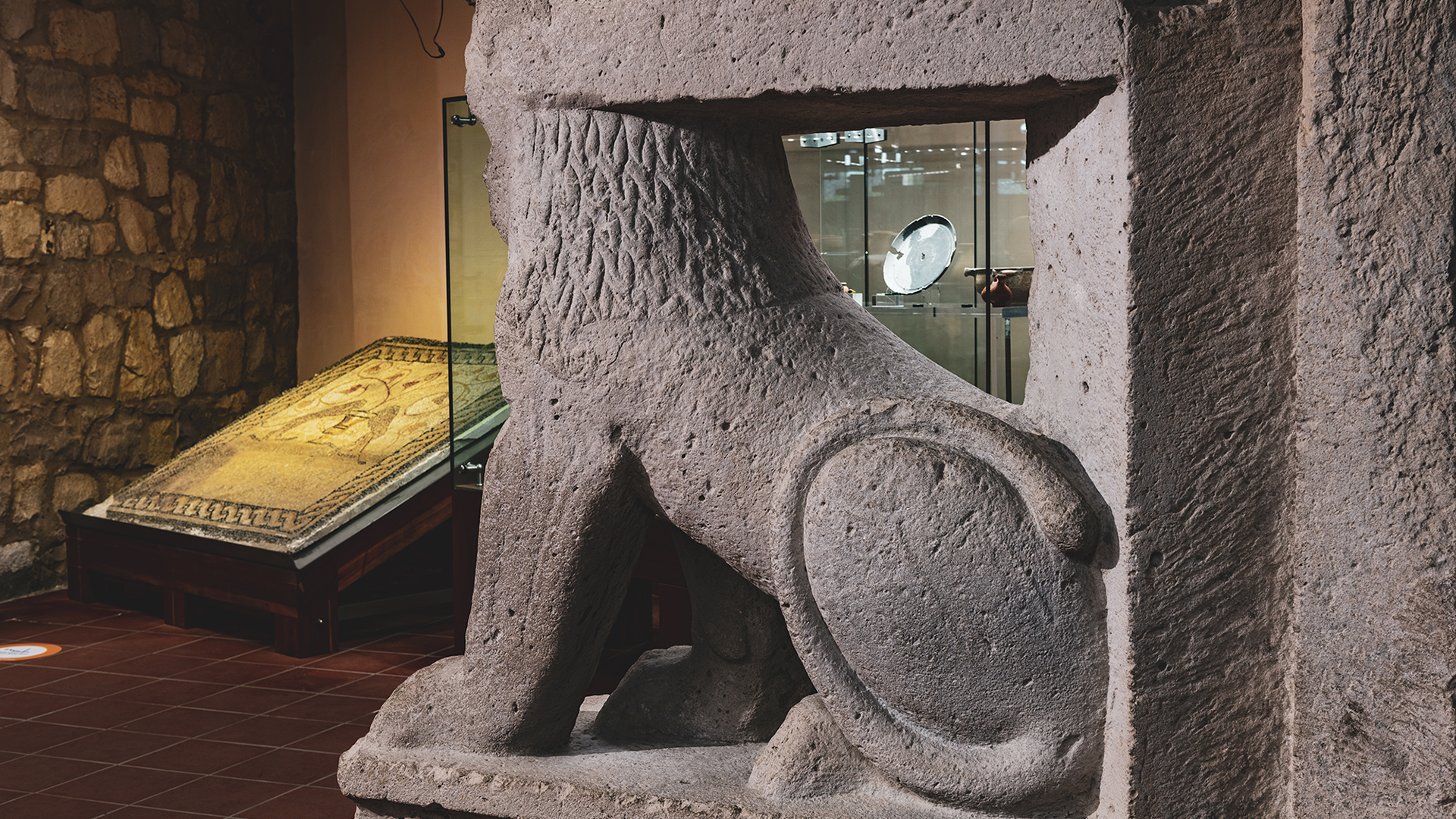
The Archaeological Museum Ferruccio Barreca will take you on a journey into the past through the stories and evidence of ancient civilisations. Between sensory experiences and guided tours, you can learn in depth about the Phoenician origins of Sulky, the oldest city in Italy.
Location: Via Sabatino Moscati
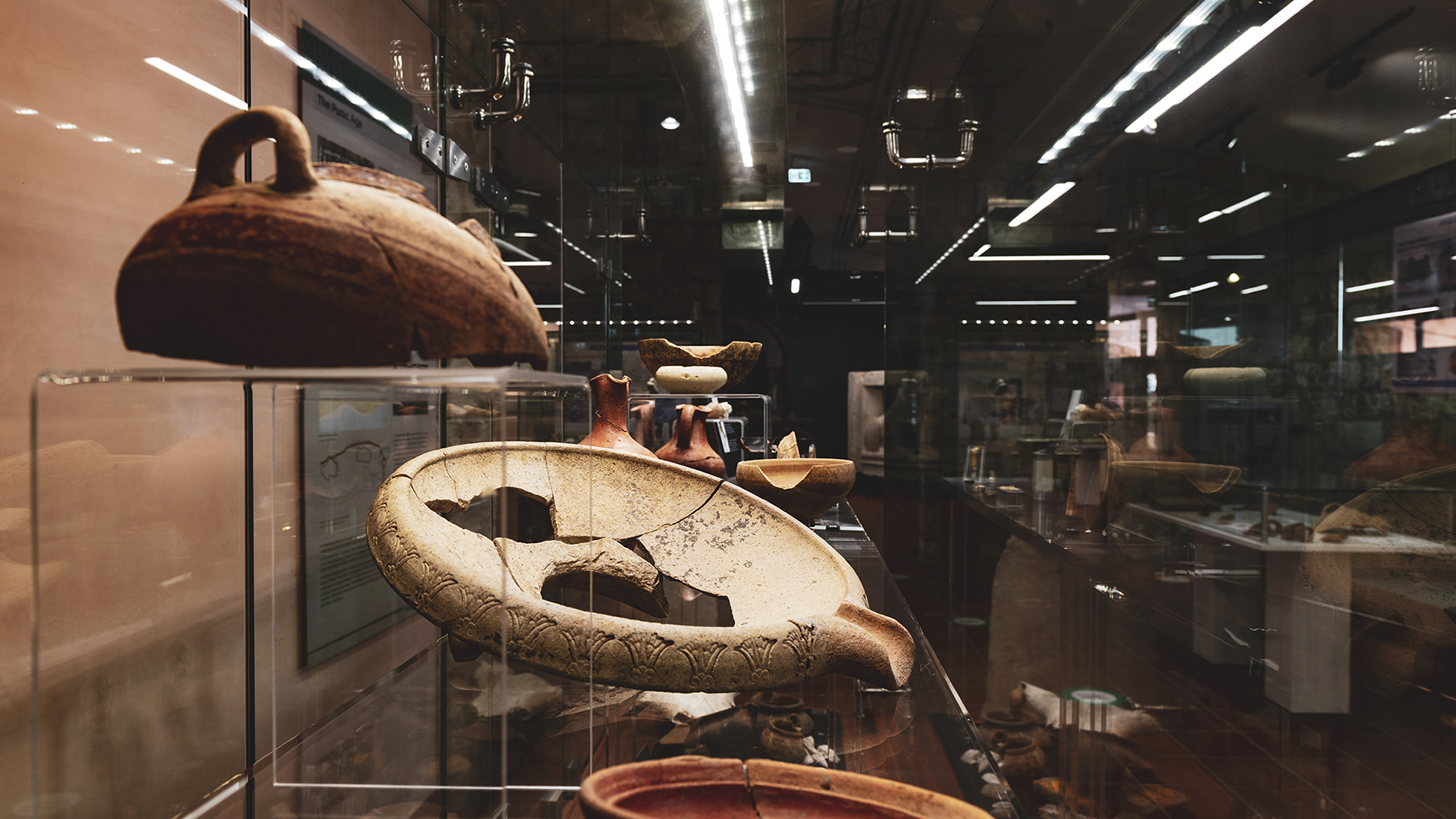
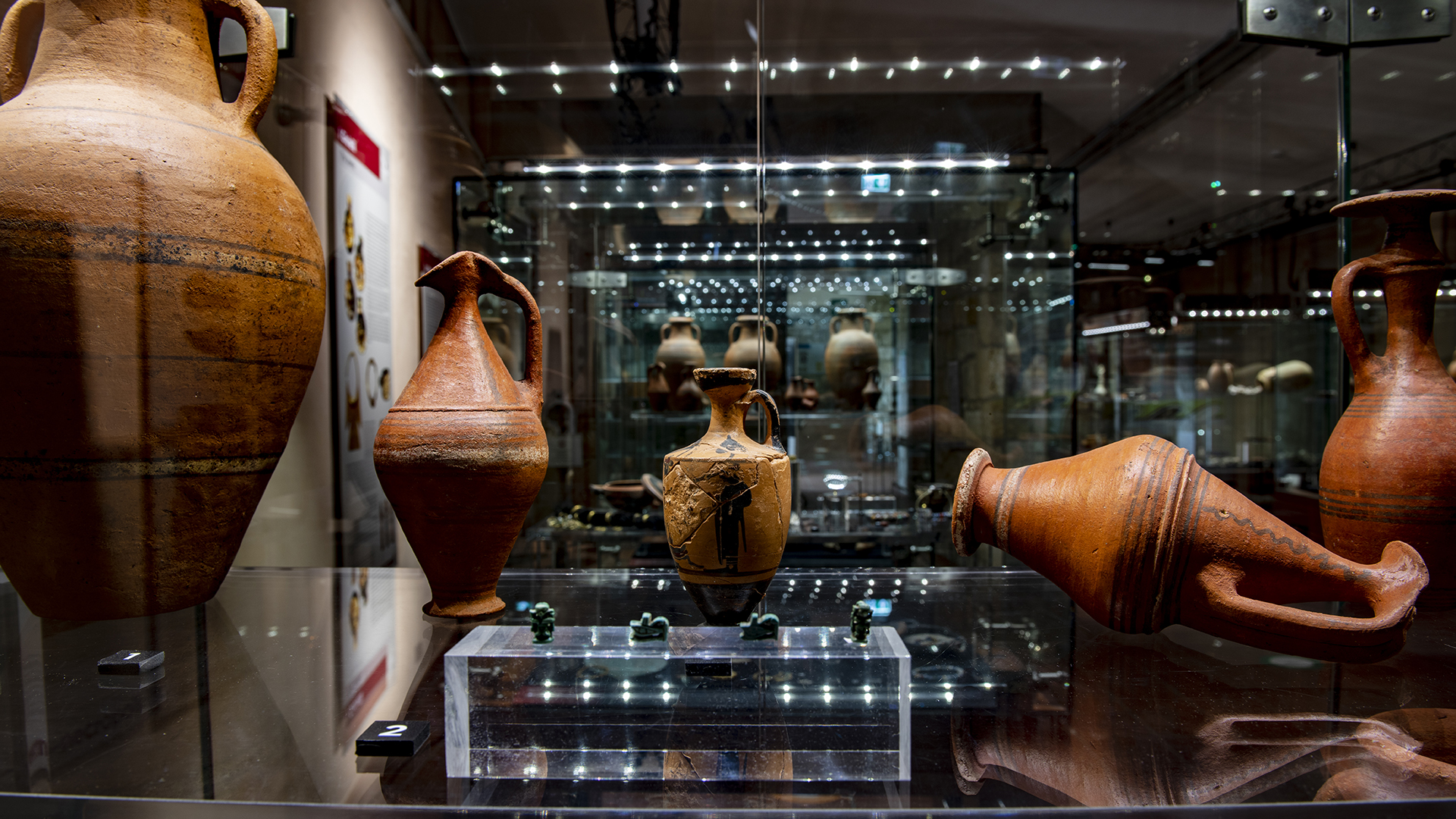
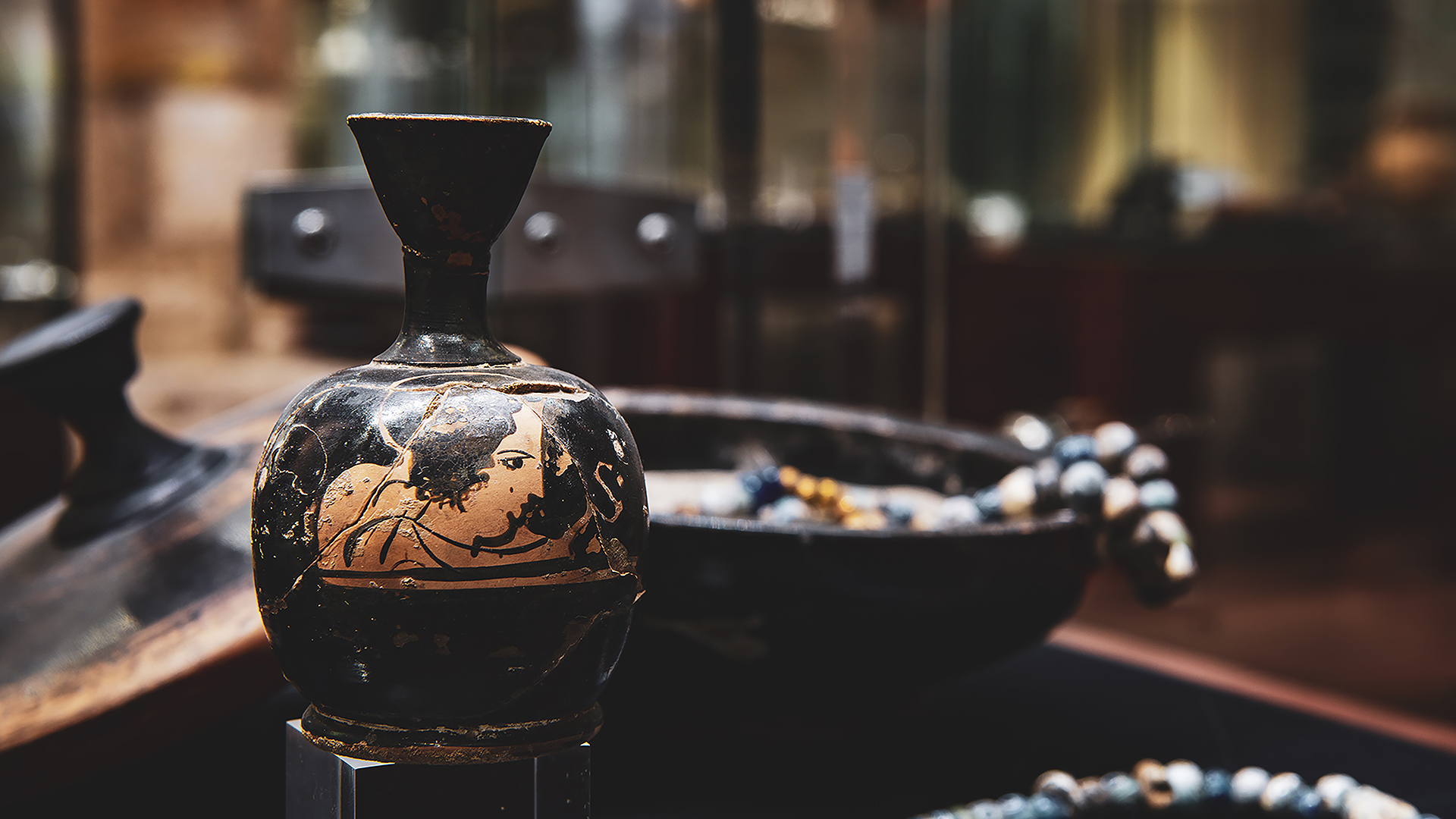
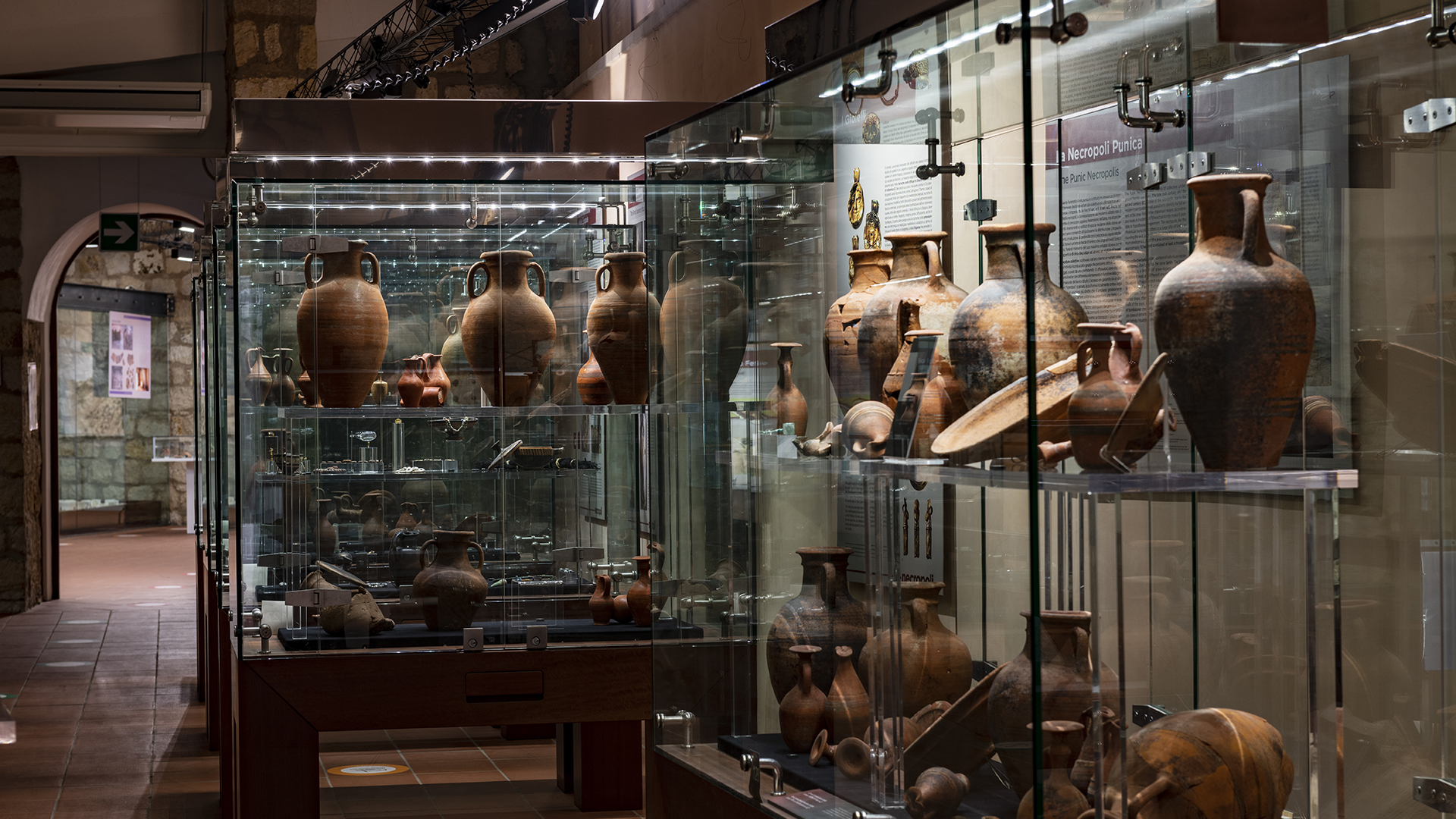
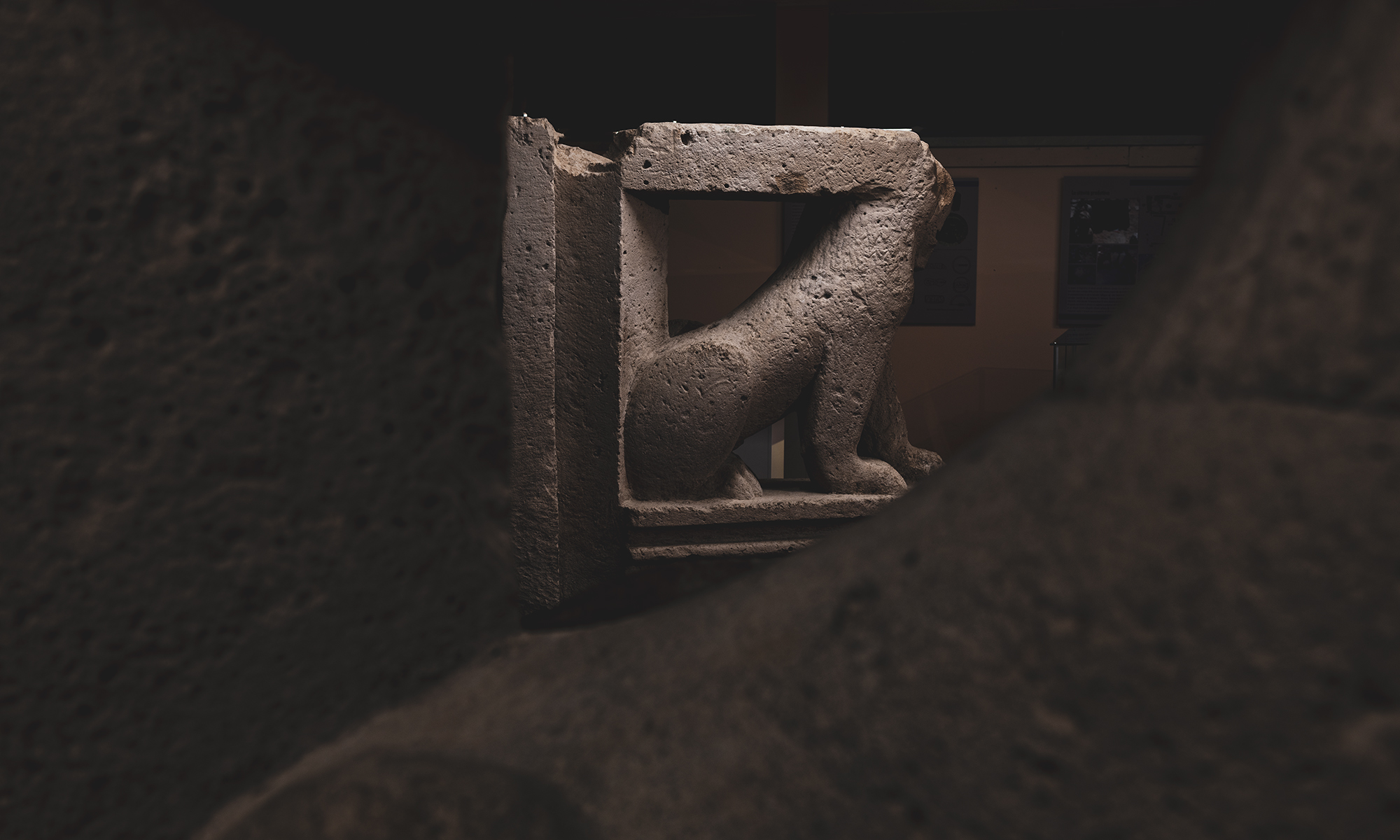
The Ferruccio Barreca Archaeological Museum is a window into the history of our ancestors, of whom we find material evidence from the Neolithic to the late Roman period. Very important are the findings from the Nuragic period, in particular the splendid bronze statuette of the archer, a unique piece with ancestral charm.
Buoyed by the east wind that swelled their sails, the Phoenicians landed on our island where they founded the city of Sulky. Here they met the local population, the Nuragics, with whom they coexisted and collaborated until their total integration and the birth of a civilisation with new characters.
Also called Levantines, the Phoenicians were a people of skilled navigators and their trade flourished. Of the ancient city of Sulky, now considered one of the earliest Phoenician centres in the central Mediterranean, numerous 'treasures' are preserved at the MAB.
Listen to the podcast

Such as the ancient terracotta urns of Tophet that housed the ashes of children who died naturally at an early age, and the remains of small animals that were offered to the deities as a symbol of good omen.
Or like the numerous grave goods found in the ancient Punic Necropolis of Is Pirixedduswhich unearthed jewellery, amulets and objects typical of everyday life.
The MAB is a magnificent museum, which tells a thousand different stories and therefore deserves to be experienced with different eyes, but which will always be fascinated by Sant'Antioco's thousand-year history.
- Via Sabatino Moscati
- +39 3897962114
- parcostoricoarcheologicosantantioco.com
STAGE 2
MuMA
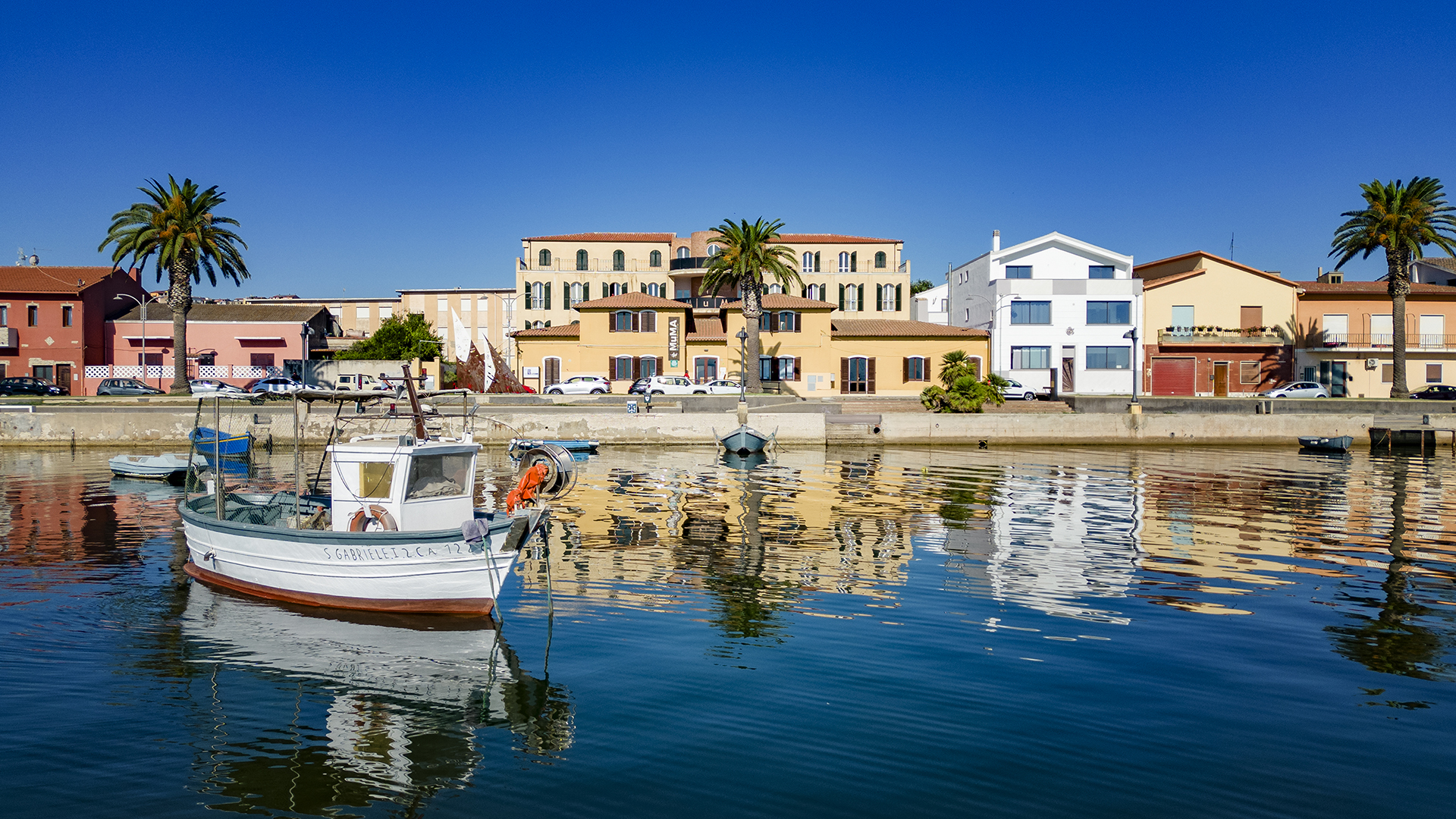
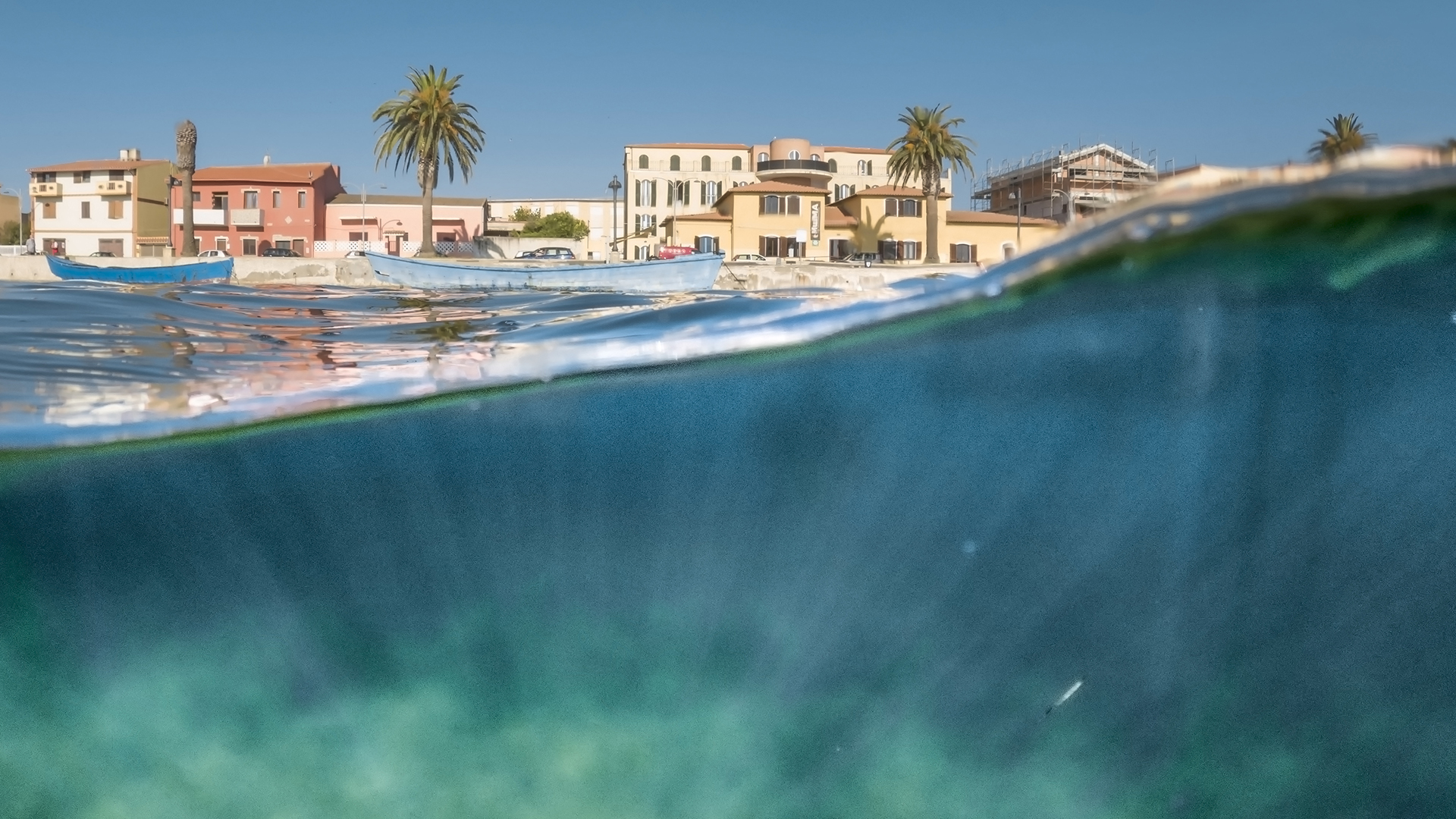
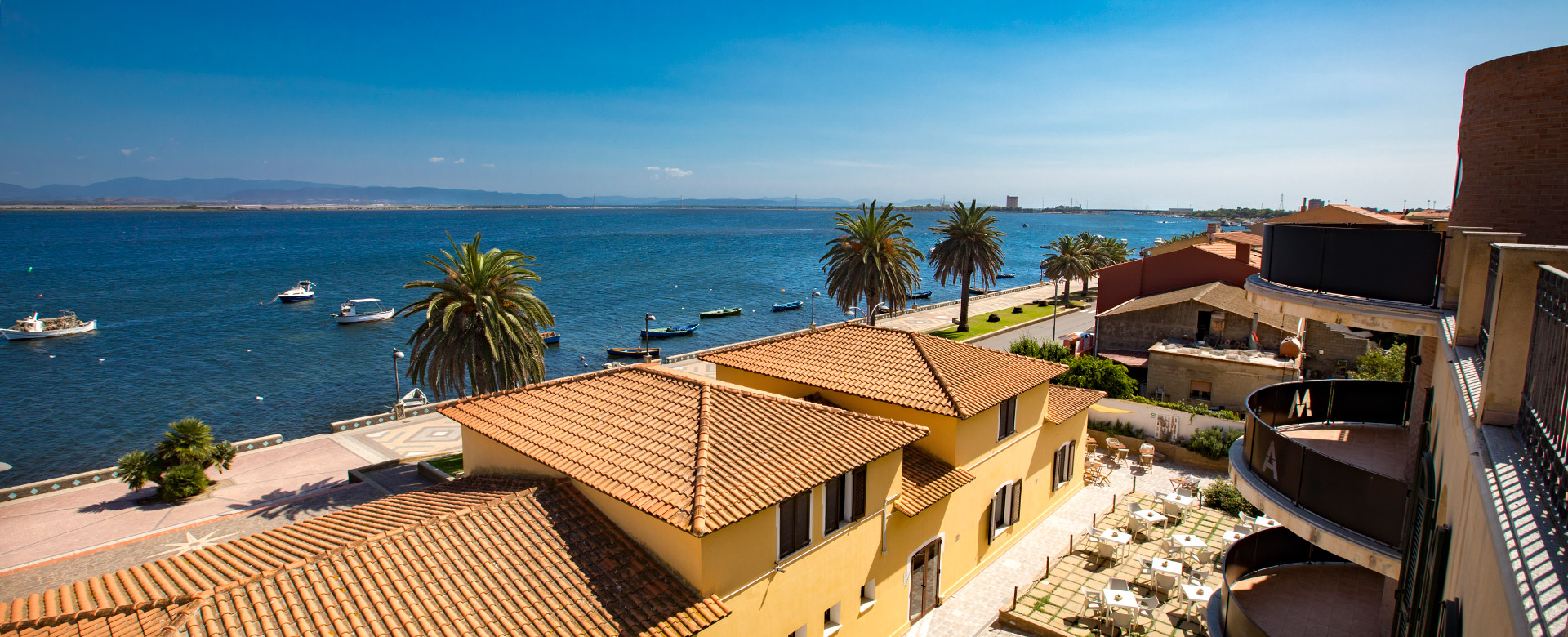
Between the rich lagoon ecosystem, invaluable for the preservation of plant and animal species, and the traditional work of the Shipwrights, the MuMA, Museo del Mare e dei Maestri d'Ascia, tells the story of the most precious asset we have: the sea.
Location: Lungomare Cristoforo Colombo, 25
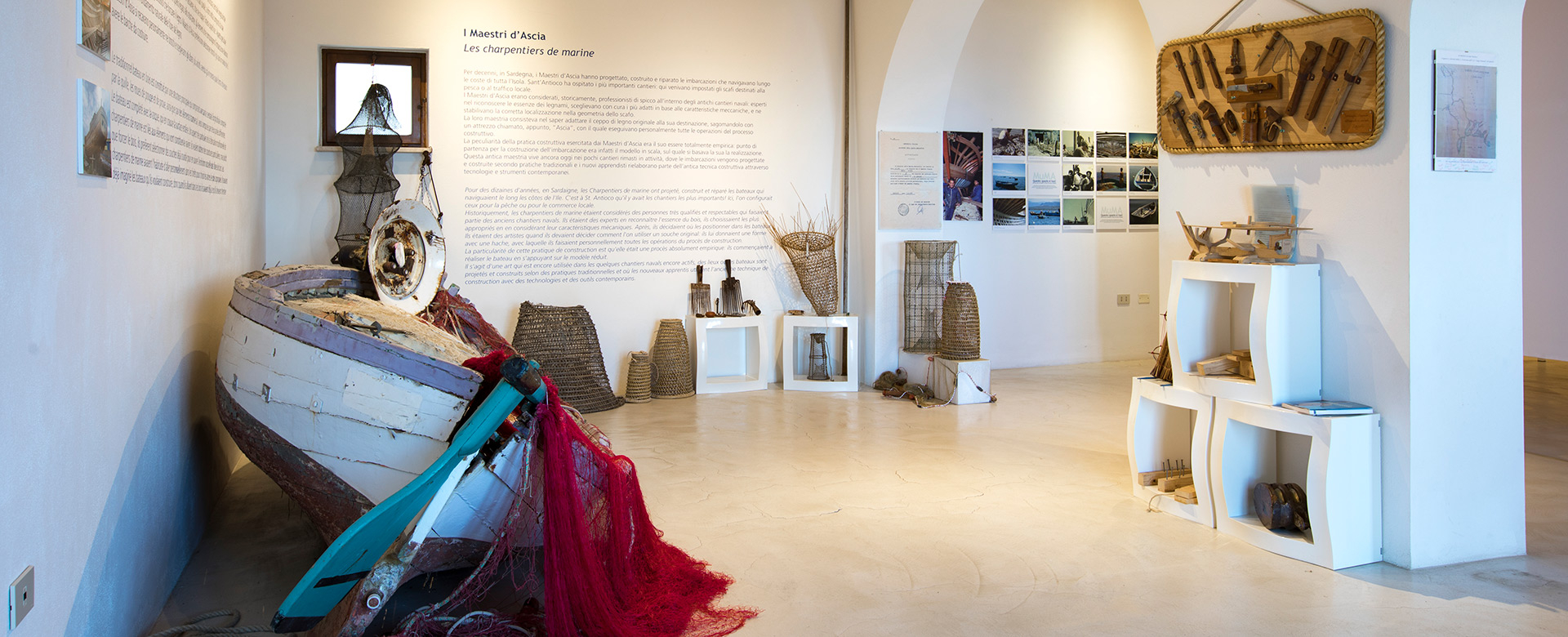
The Museo del Mare e dei Maestri d'Ascia was created to celebrate the figure of these rare craftsmen, who in Sant'Antioco continue to carry on the tradition of handcrafted wooden boats.
Their work begins with the important phase of choosing the wood, which will then be shaped using the traditional tools kept at MuMA, to create the island's typical boats: on ciu, the flat-bottomed fishermen's boat, capable of navigating even in the shallowest of lagoon depths, and the boats with the sailing latinunique pieces of inestimable value.
It is precisely the fishermen of Sant'Antioco who have donated numerous tools of their trade to the museum, such as nets or the splendid pots traditional traps for small fish, octopus, cuttlefish and crustaceans in the lagoon, made in the past using reed stalks and natural filaments.
Listen to the podcast

Thanks to the work of Ceas, the Sant'Antioco Environmental Education Centre, starting from MuMA you will discover the natural heritage of the area, especially that of the island's wetlands such as the Sant'Antioco Lagoon, the Santa Caterina Pond and the Salina. In these areas, you will be able to admire many species of local avifauna such as the pink flamingo, the herring gull, the avocet and the stilt-bird, as well as special plant species such as the glasswort, the bulrush and the Malta mushroom.
Don't miss a visit to the MuMA and the chance to discover all the wonders of Sant'Antioco's wetlands.
STAGE 3
Roman Bridge
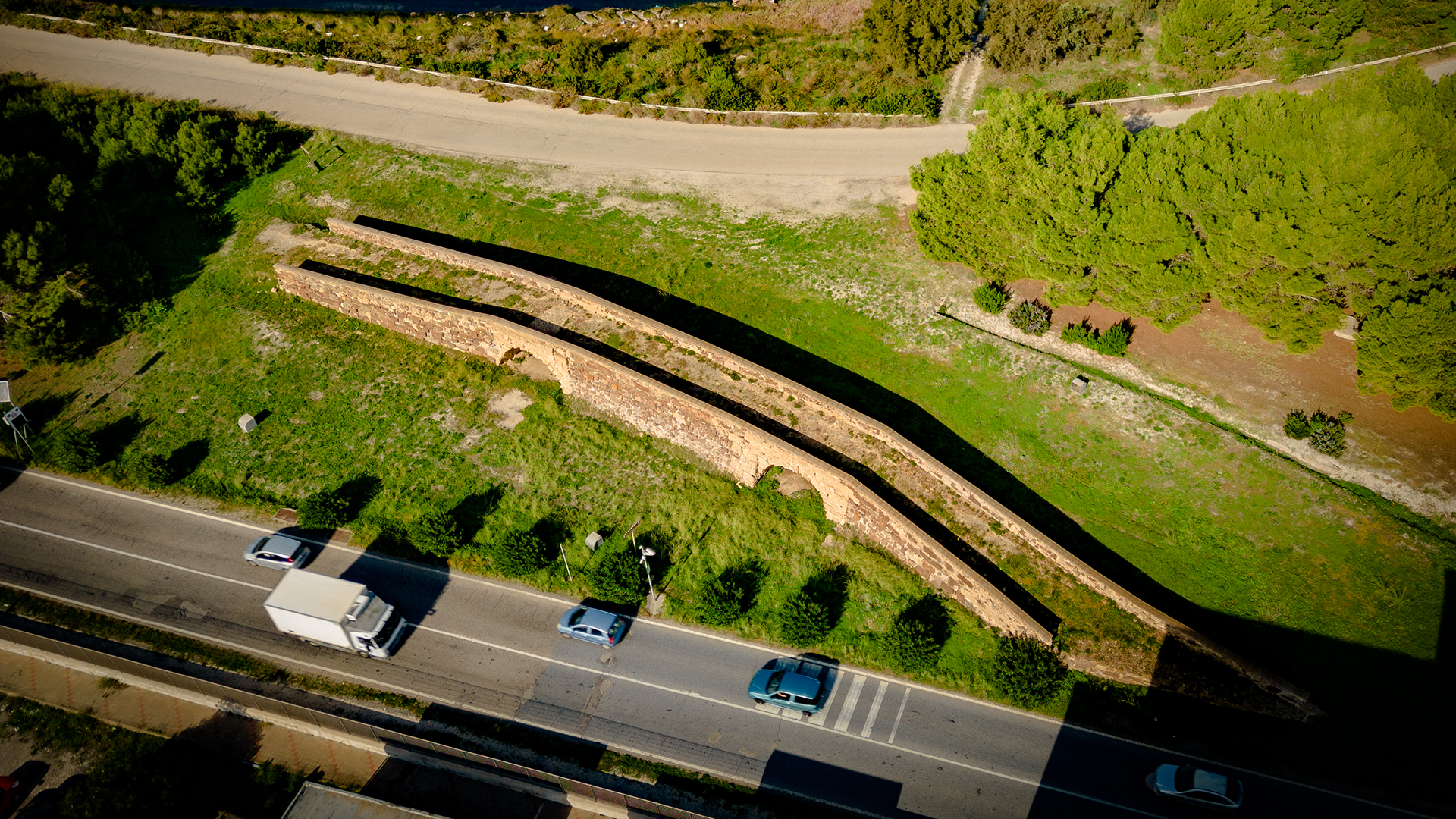
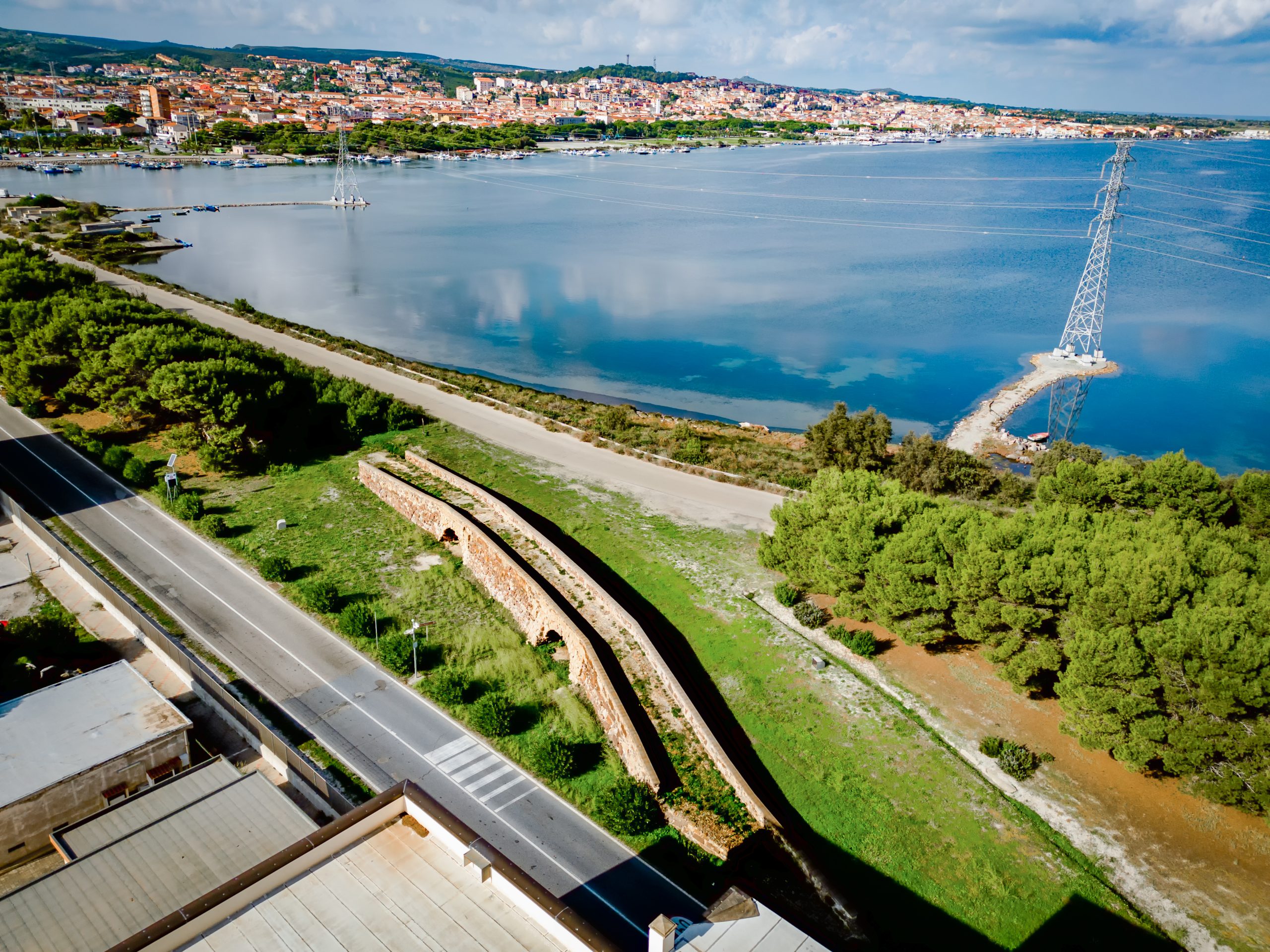
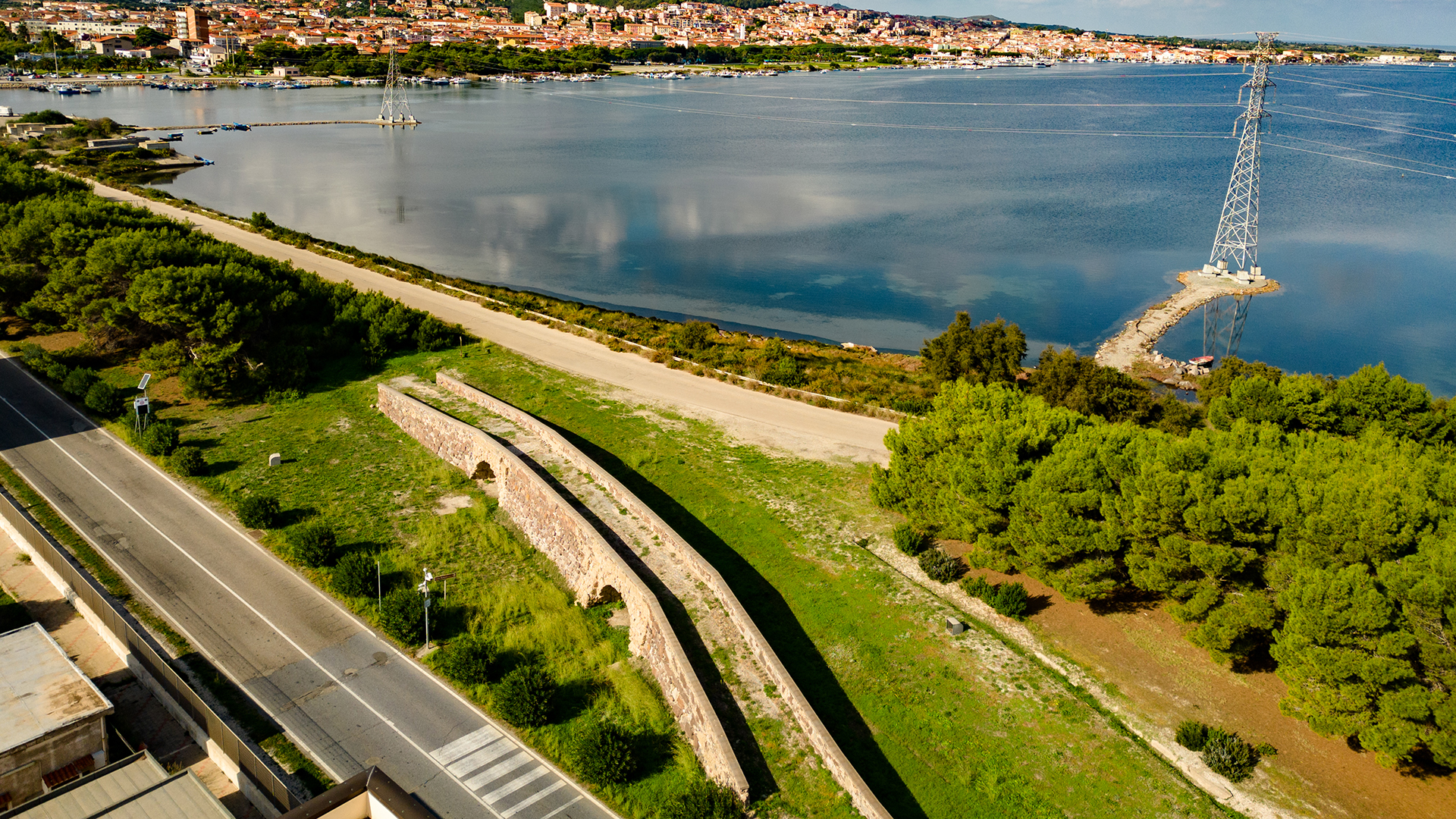
Union of peoples, cultures, traditions: this is what the Roman Bridge represents for us, which for two millennia was the only land link between Sant'Antioco and the rest of Sardinia. Today you can admire it in all its ancient splendour when you arrive on the island.
Location: Roman Bridge
Su Ponti Mannu, 'Il Ponte Grande' is one of the most important testimonies to the ancient history of Sant'Antioco, the Sulci of Roman times.
This majestic work was an integral part of the Roman road that connected Karalis, ancient Cagliari, and Sulci, which in its last stretch towards the latter ran with a system of bridges and paved roads through the area of the Santa Caterina pond and its islets. Today, a short section of the original Roman road still remains visible, partially submerged but clearly visible on days when the tide is low.
A peculiarity of the Roman bridge, compared to other similar structures in Sardinia, is its original function: while other examples of bridges served to cross rivers and streams or to overcome differences in level, this bridge actually connected an island to the mainland.
Listen to the podcast

Its use stretched over the centuries, testifying to the skill and wisdom of Roman engineers, and some black and white photographs are preserved of its final years of service, traversed by wagons and people.
In the years ... work began on the construction of the modern bridge, which can also be crossed by cars, but the Roman Bridge still stands, as if to proudly remind us of its importance and the former glory of the town of Sulci.
STAGE 4
The salt mine: discover it with the Salt Guides
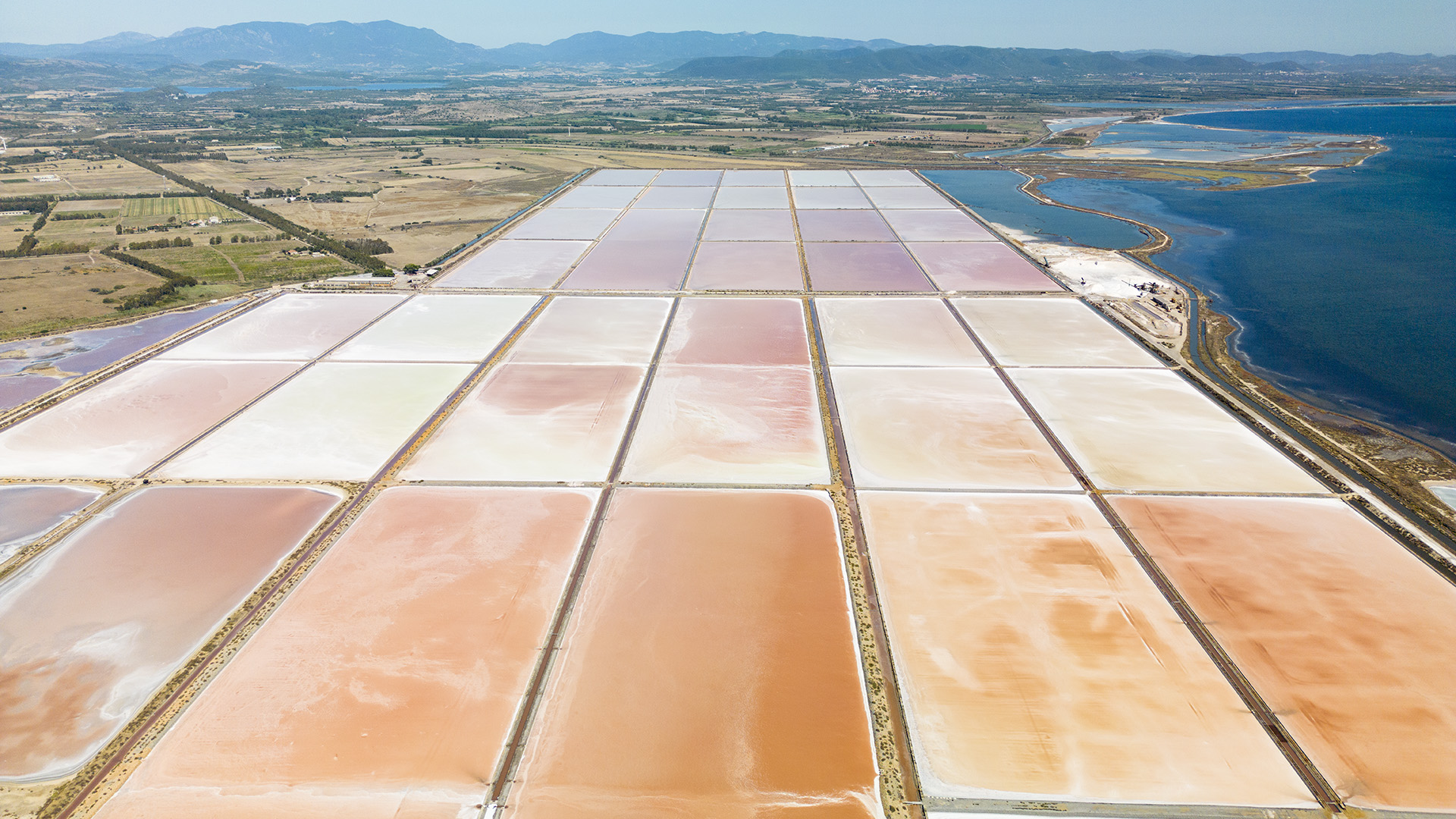
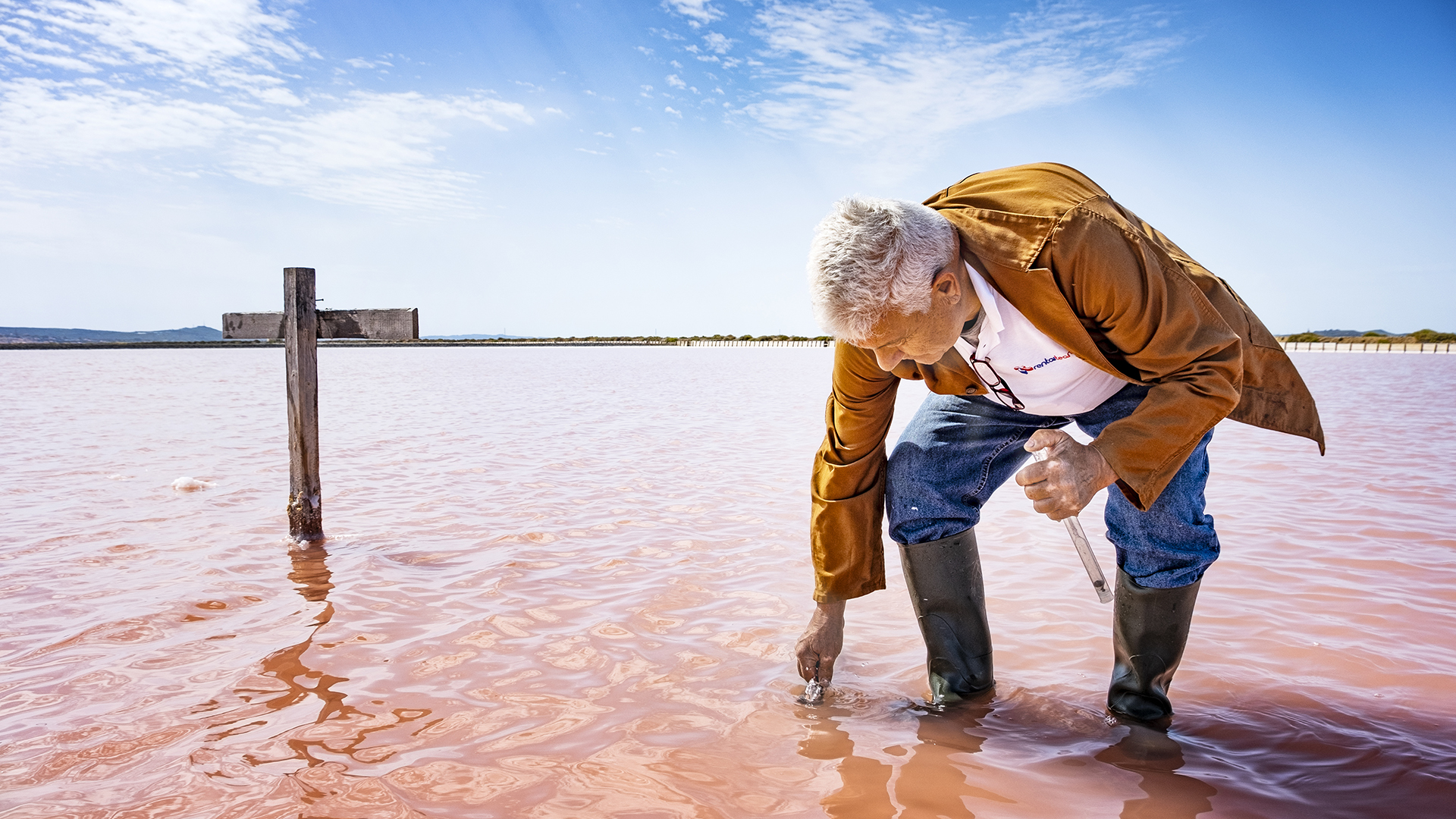
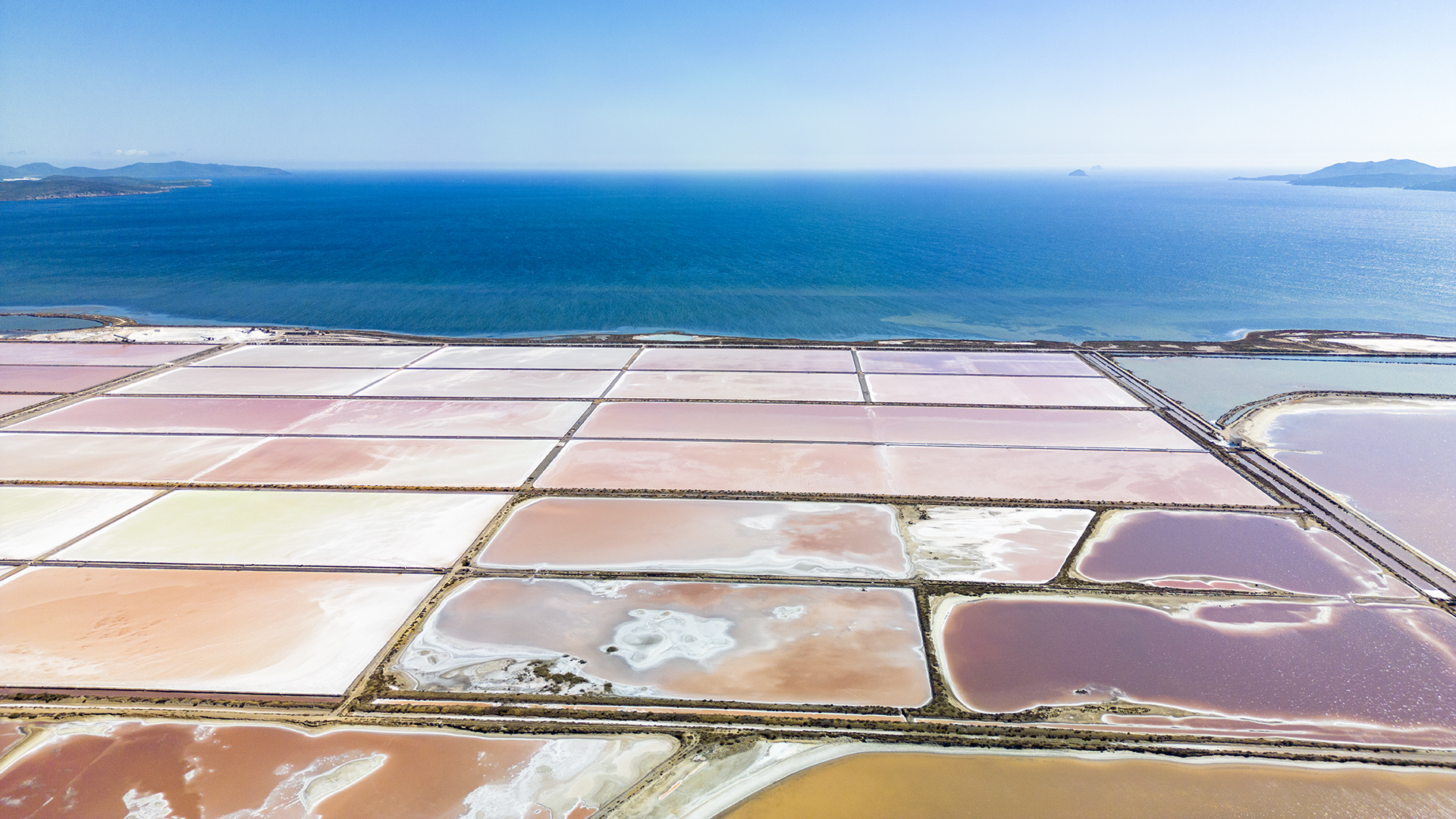
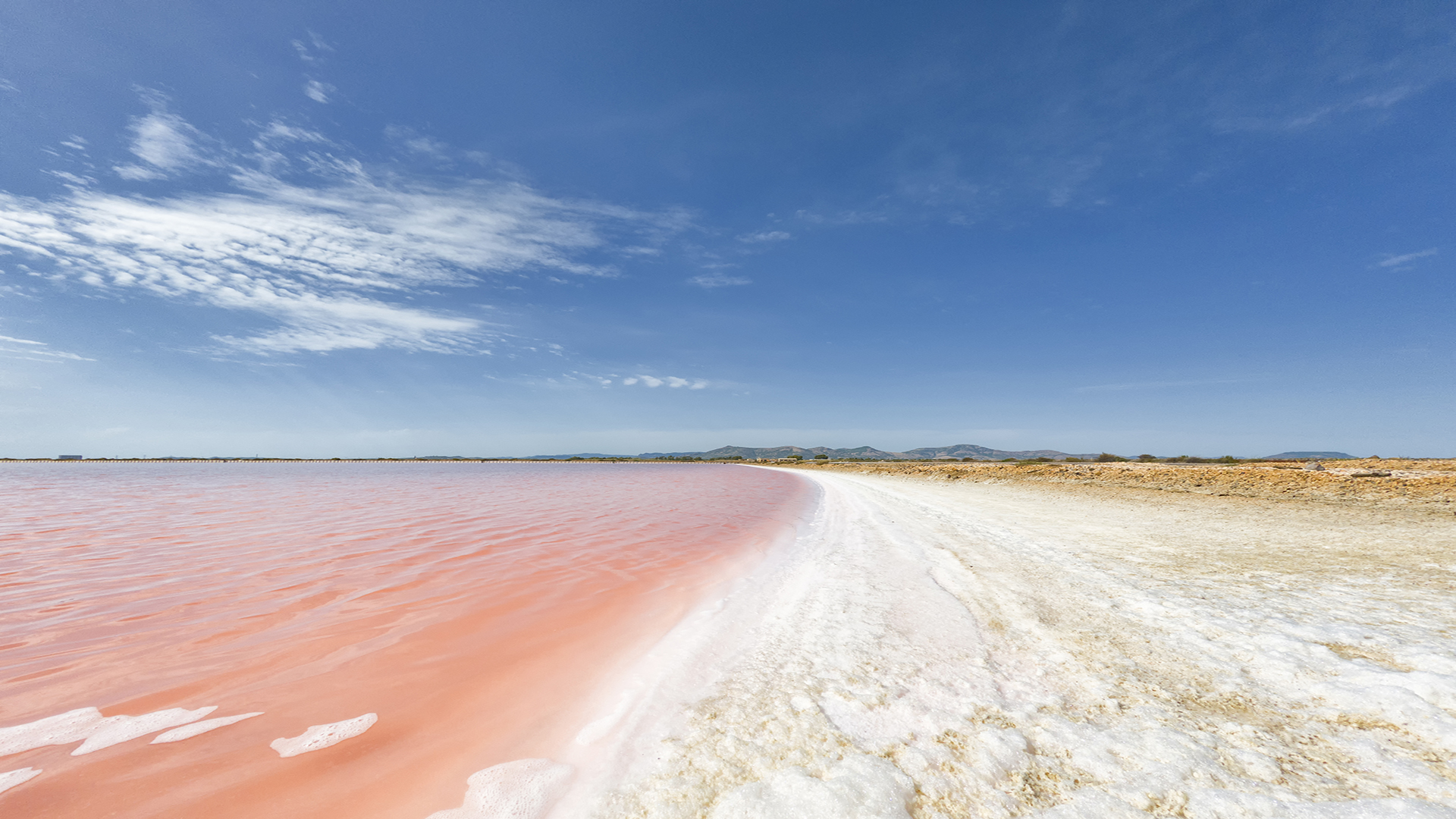
Suspended between expanses and basins of water, colonies of seabirds and white expanses of salt, accompanied by the Salt Guides, you can lose yourself in the salt pans and admire a unique panorama. To the south, a breathtaking view of the entire Gulf of Palmas while to the west, stretching between the lagoon mirrors, stands the town of Sant'Antioco.
Location: Salina Trail
It is a unique and evocative place, paths branching off between expanses of pink and blue water, piles of white salt evoking lunar landscapes.
The salt marsh of Sant'Antioco, probably dating back to Roman times, overlooks the Gulf of Palmas and stretches 20 km along the coast between Porto Pino and the isthmus.
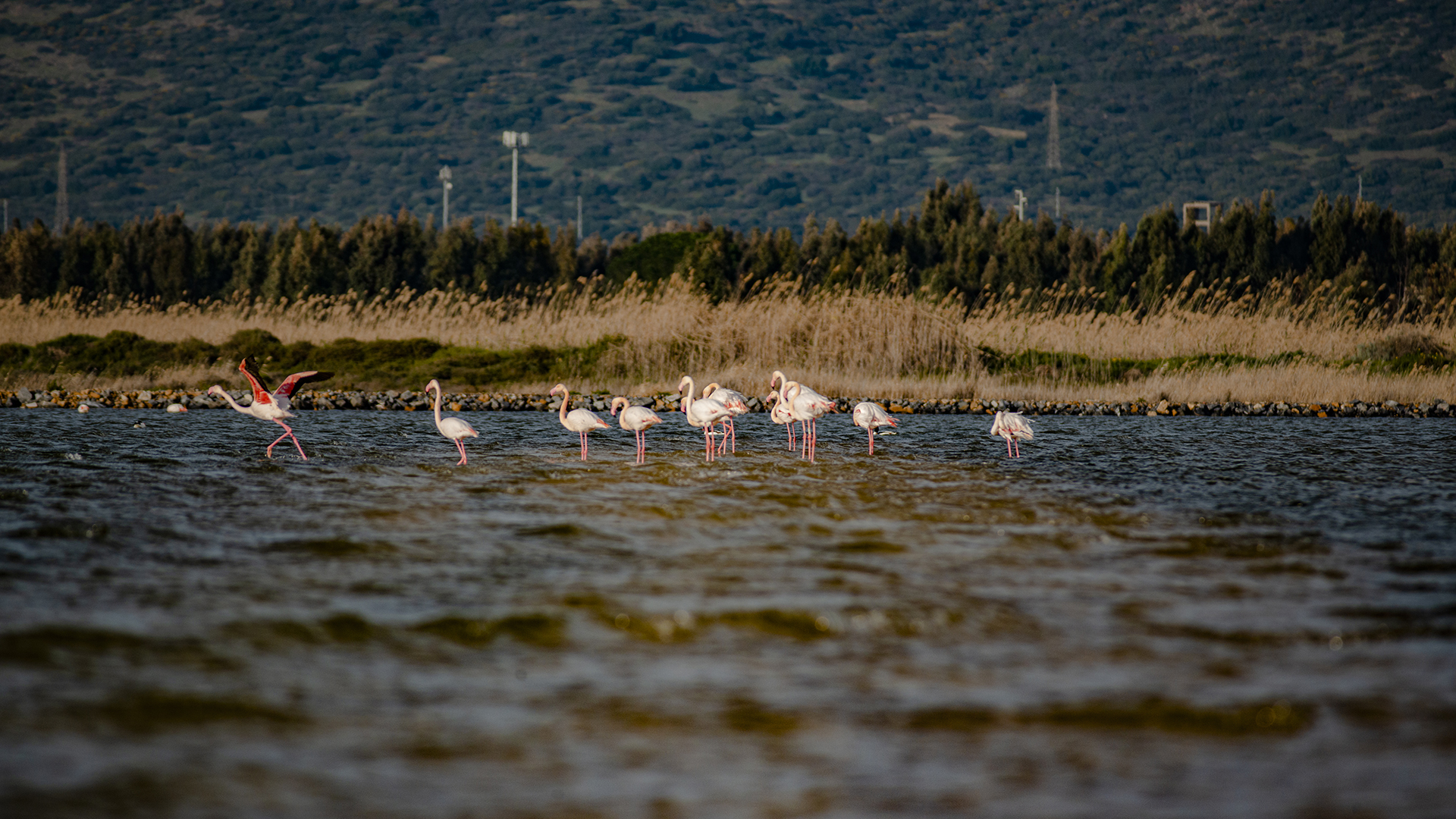
The area is located in an area of great beauty characterised by Mediterranean scrubland in which volcanic rocks and limestone alternate. It is a natural oasis for many animal species, including colonies of the pink flamingo, one of the oldest species of birds, wading birds of great size with very long legs and necks.
Listen to the podcast
Their characteristic pink plumage is linked to the food on which they feed: small crustaceans, including Artemia salinawhich contains an orange-red pigment. Young specimens have a brownish-grey colouration while the pink of the adult only appears after the second year of life.
The particular shape of its large beak, equipped with small lamellae, allows it to filter water, pumping it out through its tongue and retaining a collection of small organisms inside.
Book your visit to the Salina di Sant'Antioco!


STAGE 5
Menhir
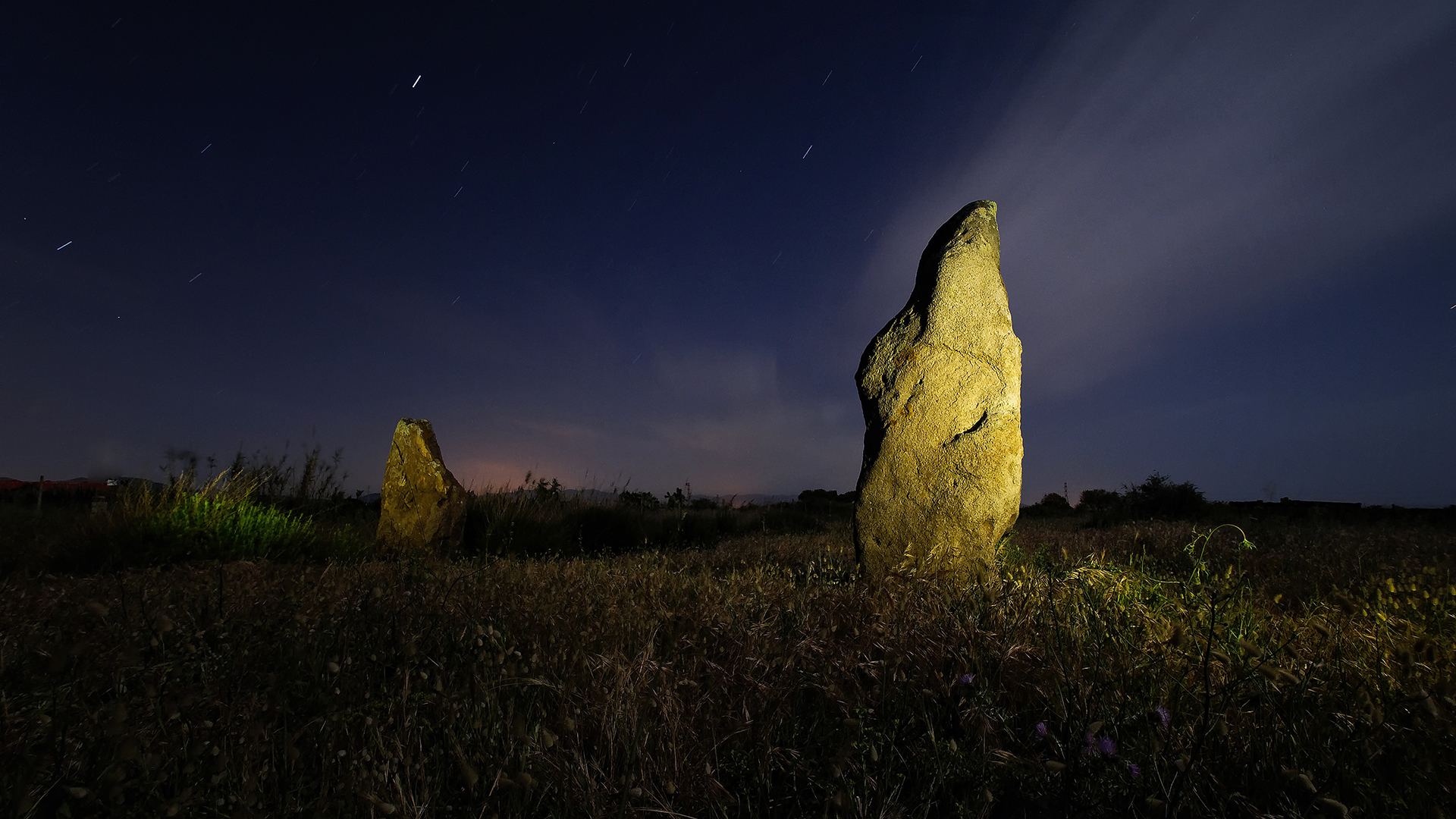
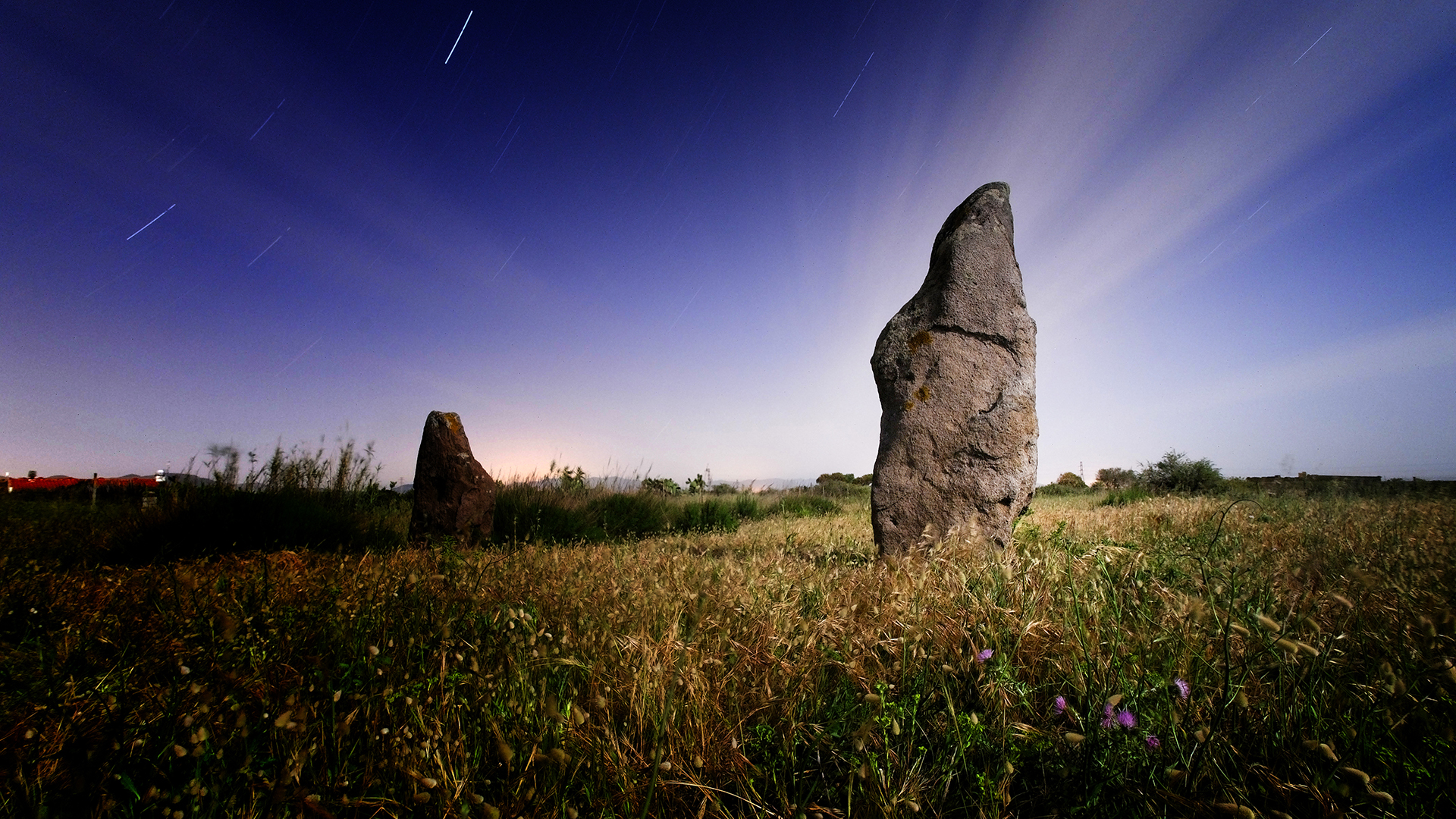
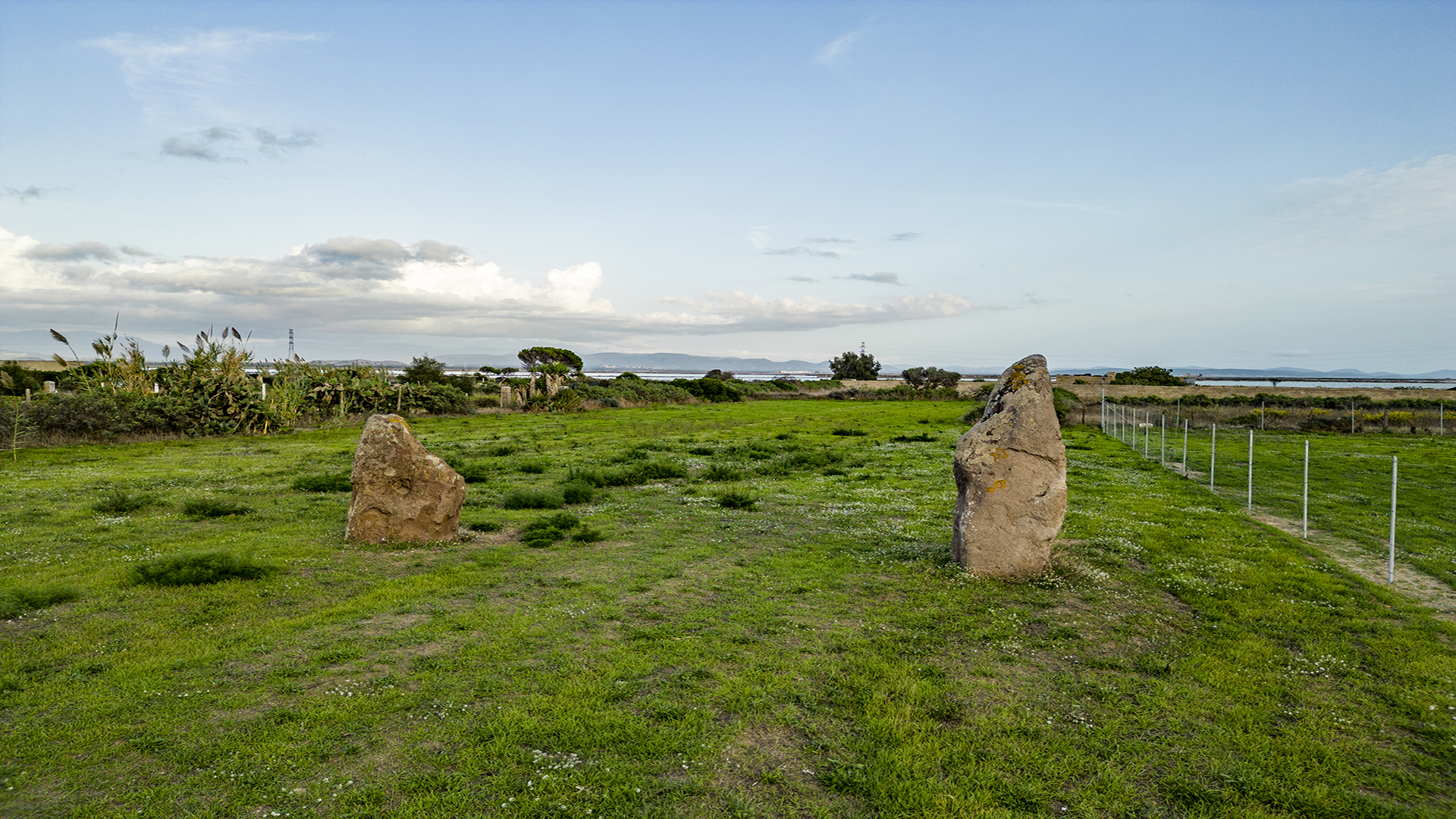
Amidst a system of islets, tongues of land, bridges and roads at sea level, the menhirs of Sant'Antioco, nicknamed 'Su Para e Sa Mongia', 'The priest and the nun', stand out in all their pride. For over five thousand years, the two thick stones have guarded the access to the island of Sant'Antioco, positioned at the only land access point to the island.
Location: 'Su Para E Sa Mongia' Menhir
During prehistoric times, menhirs were used as places of prayer and worship and could reach, and sometimes exceed, twenty metres in height. They are also known as perdas fittas (embedded stones) and symbolise regeneration.
In the area, resembling a vast plain, probably the site of a village datable to the Ozieri culture (between 3200 and 2800 BC), the two monolithic megaliths are clearly visible, even in the distance, due to their considerable size. On Parawith faces facing south-west and north-west, is three metres high, a conical diameter, with hollows and protuberances reminiscent of male features. Sa Mongia is two metres high and has a protuberance and several cup-marks typical of the female figure but faces south-east and north-east as if the two lovers could look into each other's eyes but not be close enough to touch.
Listen to the podcast
The likeness and position of the two blocks thus ensured that the two figures were elected as symbols of an eternal and indissoluble love despite adversity.
The legend of the monk and the nun, however, has no basis in truth and is linked to the narratives of the popular oral tradition mainly due to the need to understand the presence of those particular prehistoric testimonies. In fact, menhirs have always enjoyed a certain aura of mystery and fascination so much so as to create magical legends like this one.