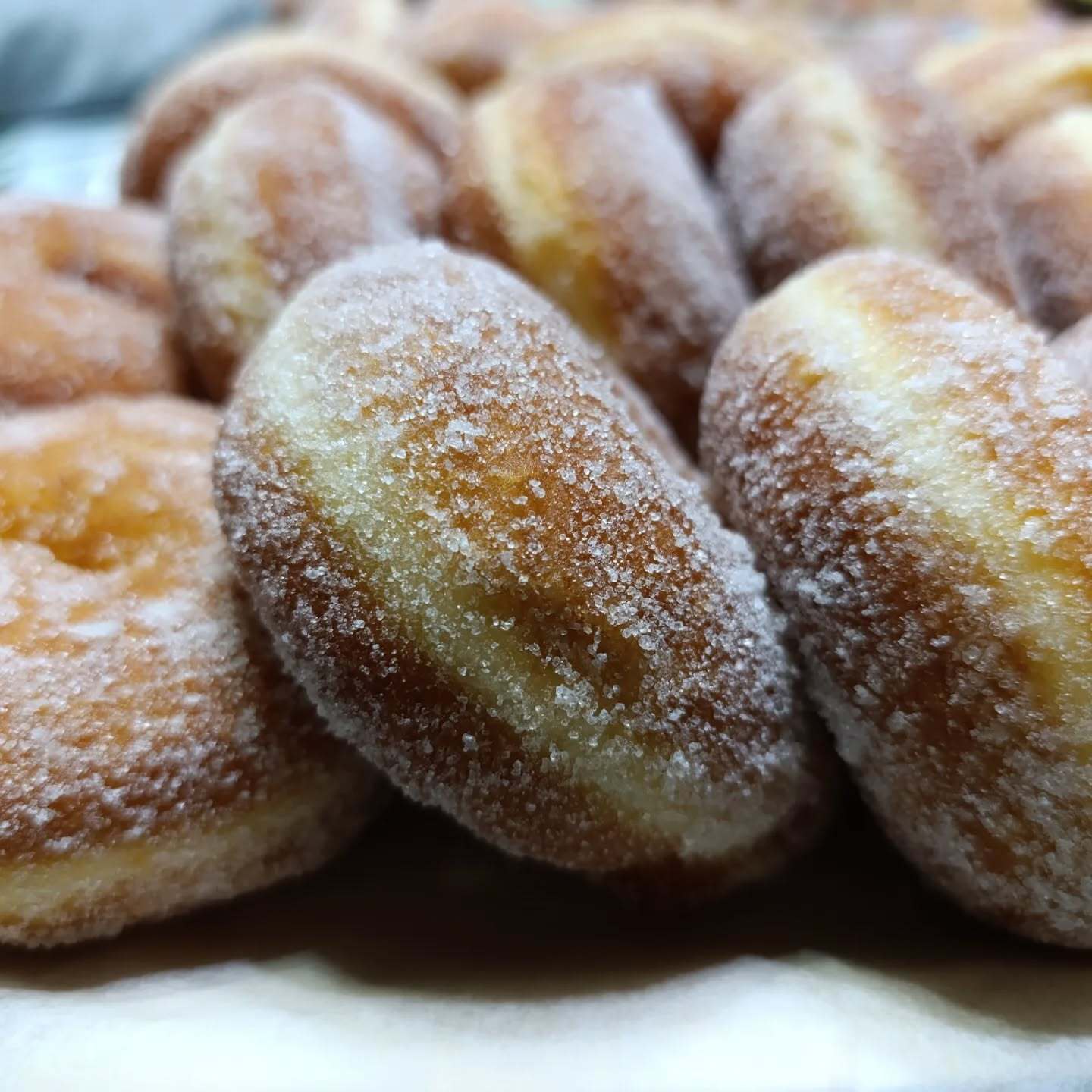
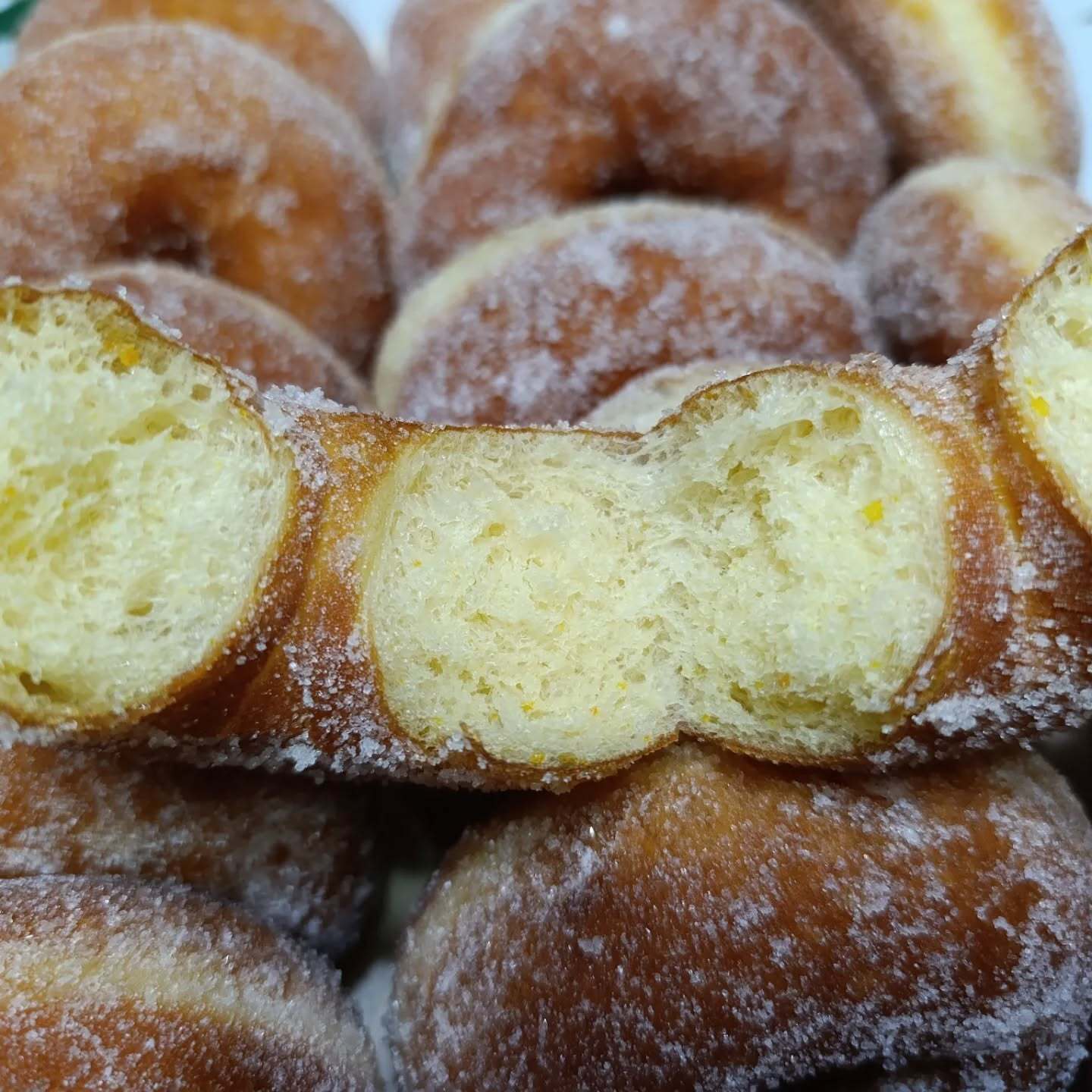
Sardinian fried facts are one of the most representative sweets of the island's tradition. Fluffy, citrus-scented and golden on the outside, they are prepared especially during Carnival time, but also for family celebrations and moments of sharing.
Present in many areas of Sardinia with different names and small variations, fried facts tell of a simple cuisine, made up of genuine ingredients and gestures handed down over time.
A traditional Sardinian sweet
Also known as fried friars o parafrittusfatti fritti are fried leavened pastries characterised by a soft, fragrant dough enriched with citrus peel and a hint of liqueur. Their preparation requires care and patience, especially when kneading the dough and leavening, which are essential to obtain the typical soft texture.
The recipe we propose was shared by Fabiana Lusci, one of the protagonists of our Christmas Taste Village, where she displayed several traditional Sardinian sweets such as the pastissusalmond cake, the gueffus iced and many others.
Ever since she was a child, Fabiana has seen these sweets being made in her family and, over the years, has deepened and perfected her skills through training courses dedicated to traditional pastry making.
Ingredients
- 1 kg flour
- 4 eggs
- 100 g sugar
- 100 g lard (room temperature, not melted)
- 500 cc of milk
- 40 g brewer's yeast
- 1 pinch of salt
- A little liqueur (e.g. grappa)
- Grated peel of 2 oranges
- Grated peel of 1 lemon
Procedure
In a large bowl, pour the eggs and sugar, stirring with a ladle until smooth. Add the liqueur, citrus peel, lard and a pinch of salt.
Add about 250 cc of milk and start incorporating the flour. In the remaining 250 cc of milk, previously warmed up, dissolve the brewer's yeast. This mixture should be added to the dough a little at a time, kneading it gradually until it becomes soft and elastic.
After rising, the dough is shaped and fried in hot oil until evenly golden. The fried facts can be dipped in sugar while still hot.
Conclusions
Fried facts are not just a dessert: they are a ritual, a moment of sharing, a scent that invades the house and announces celebration. Thanks to people like Fabiana Lusci, these recipes live on, renewing themselves without losing their most authentic soul.