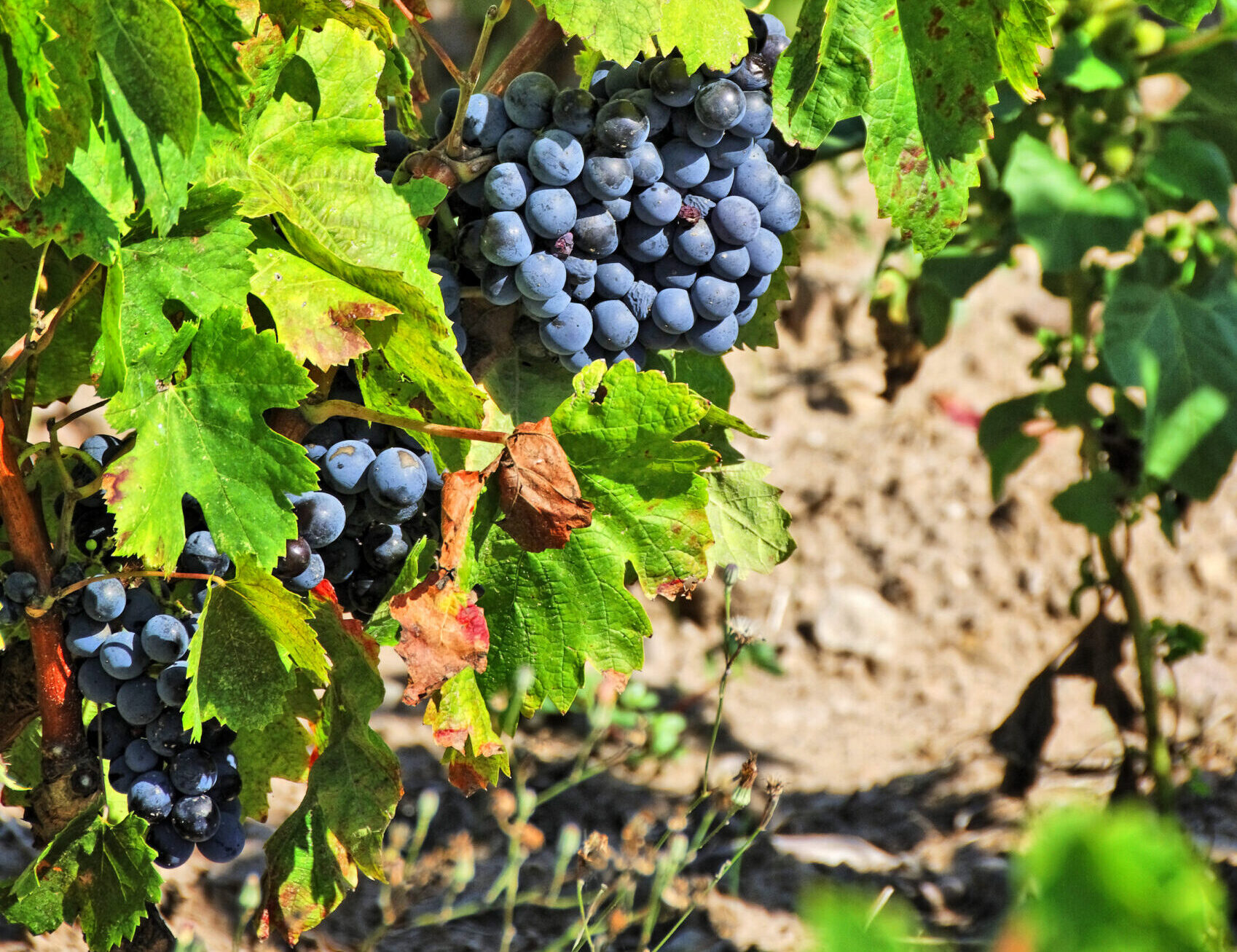
The origins and spread of Carignano
Carignano is a rustic grape variety with a strong personality, capable of withstanding difficult climatic conditions, such as the salty winds of coastal areas.
It produces small, compact bunches, with blue-black berries and a thick skin, rich in anthocyanins. This characteristic makes it ideal for producing intensely coloured wines with well-structured tannins and good longevity.
Its origins are still debated: some scholars hypothesise a Middle Eastern origin, linked to the migrations of the Phoenicians, others believe it was born in Aragon, from which it derives its Spanish name 'Cariñena', and still others think it was imported by the Piedmontese during their settlement in Calasetta in the late 1700s.
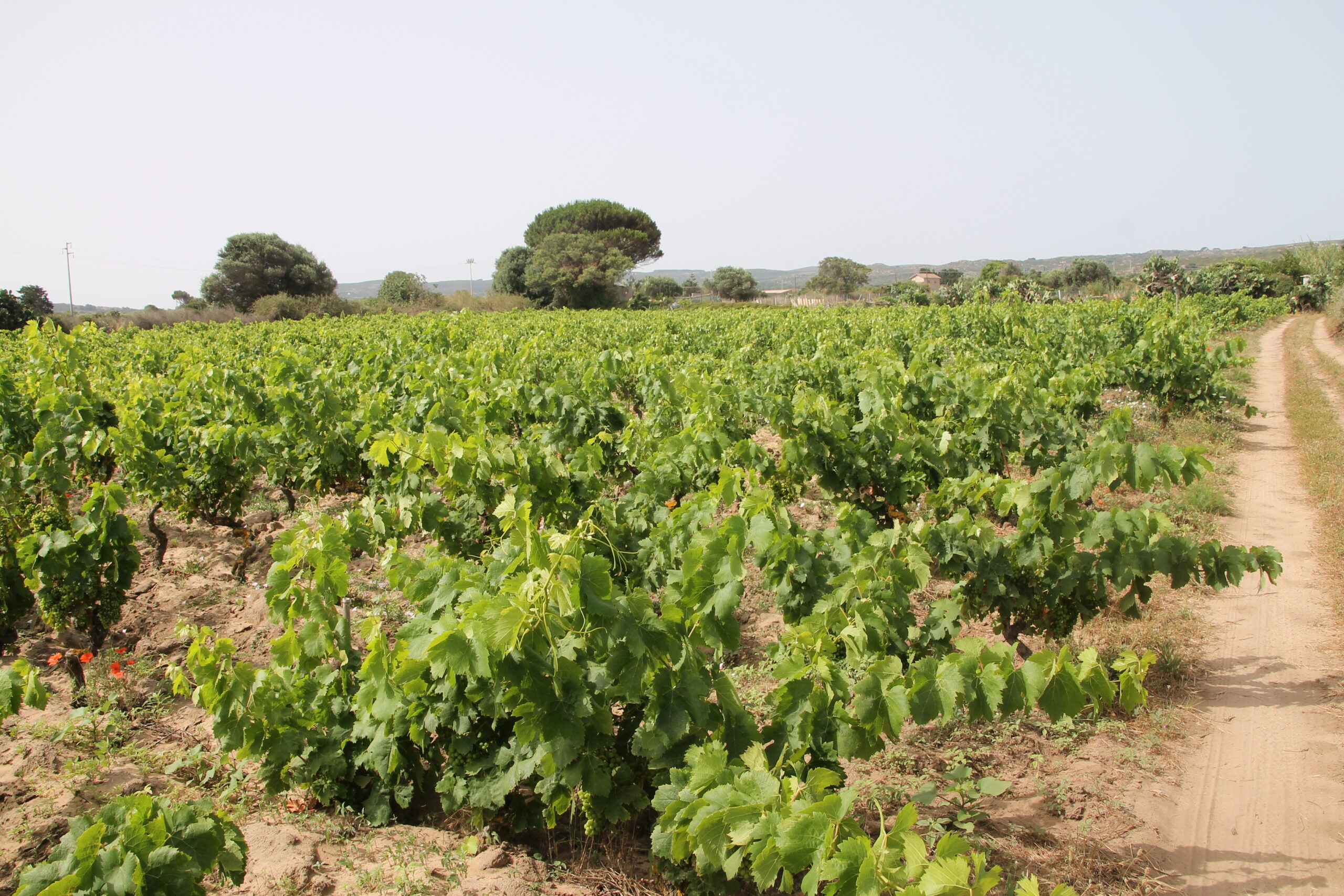
Regardless of its origin, Carignano has found a territory of excellence in the south-west of Sardinia, especially on the island of Sant'Antioco.
Here, the sandy soils, often mixed with clay and limestone, give the wines a splendid, sinuous elegance and a unique minerality. The proximity to the sea not only regulates temperatures, but also enriches the grapes with aromatic complexity thanks to the salty winds.
Carignano in Sardinia and the World
The grape variety is also known as 'Carignan' in France, where it spreads particularly in Languedoc-Roussillon, and as 'Cariñena' in Spain.
However, it is in Sardinia, and particularly on the island of Sant'Antioco, that Carignano has found its ideal terroir.
Here, it accounts for about 85% of the cultivated vineyards, and with an impressive percentage, over 94%, of vines still trained on the free-range system.
Apart from Sardinia, Carignano can be found in France, where it grows on limestone and stony soils, and in Spain, where it is better adapted to hilly areas with mineral-rich soils.
However, its Mediterranean character makes it a perfectly integrated grape variety in the wine-growing landscape of the island of Sant'Antioco.
Historical and cultural significance
Carignano has played a central role in the history of Sardinian viticulture as it provided an important source of income for local families for centuries. Starting in the early 1900s, the wine produced from this grape variety was exported mainly to France, where it was used for wine blends.
The establishment of the social wine cellars of Calasetta (1932) and Sant'Antioco (1949) marked a period of great prosperity for viticulture in the area.
However, with the advent of industrialisation in the 1970s and a short-sighted regional policy, many vineyards were uprooted.
Only in recent decades, thanks to the efforts of social wine cellars and small producers, has Carignano been experiencing a new phase of appreciation.
A vine with strong character
From an oenological point of view, Carignano produces wines of great structure and longevity, characterised by an intense colour and considerable aromatic complexity.
The proximity to the sea and the climate give these wines a unique minerality and distinct elegance.
Today, Carignano is not only a symbol of Sant'Antioco's winemaking tradition, but also an element of economic and cultural revival for the entire region.
Its rediscovery and valorisation represent a new opportunity for Sardinian viticulture and for all enthusiasts.