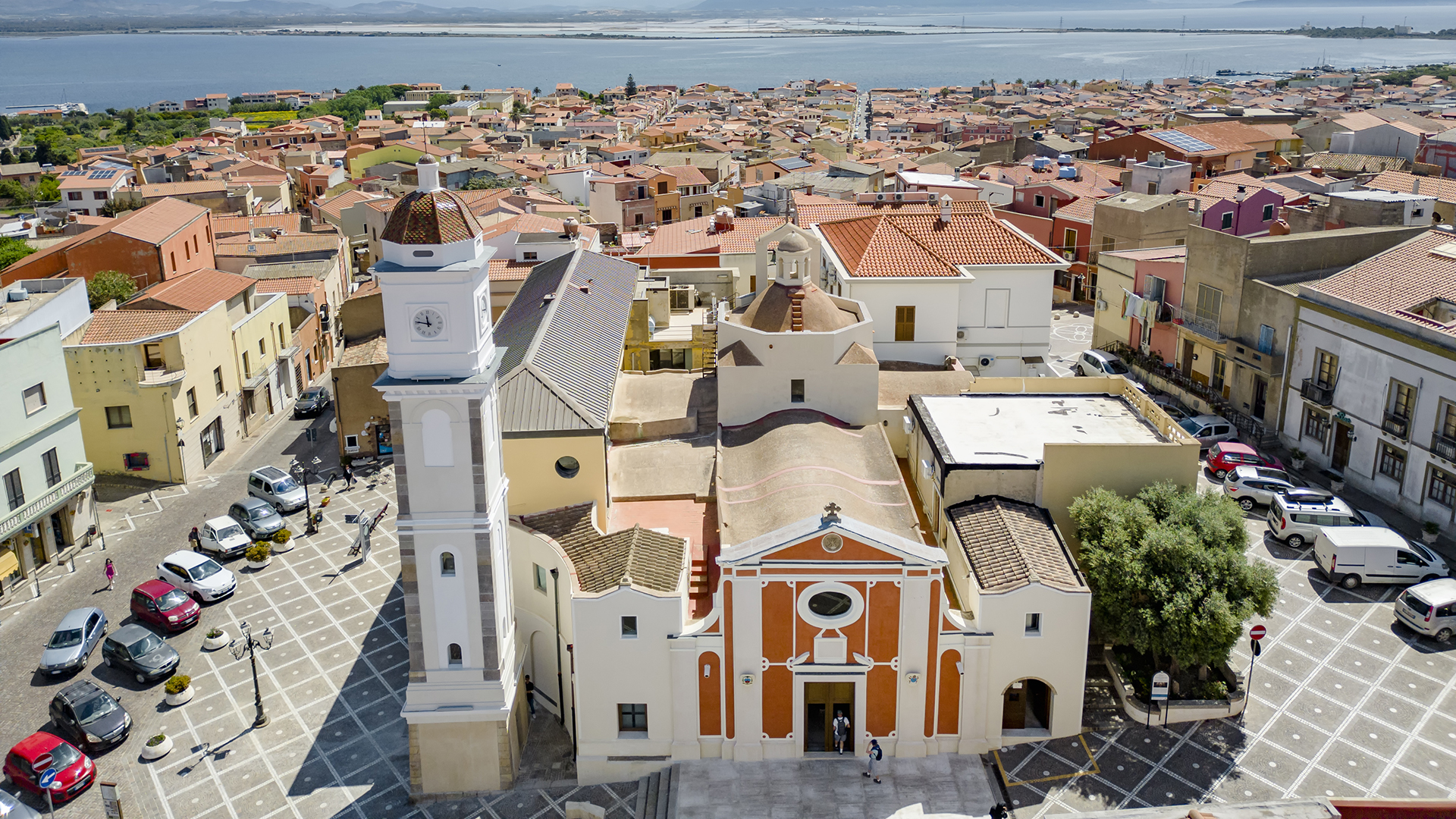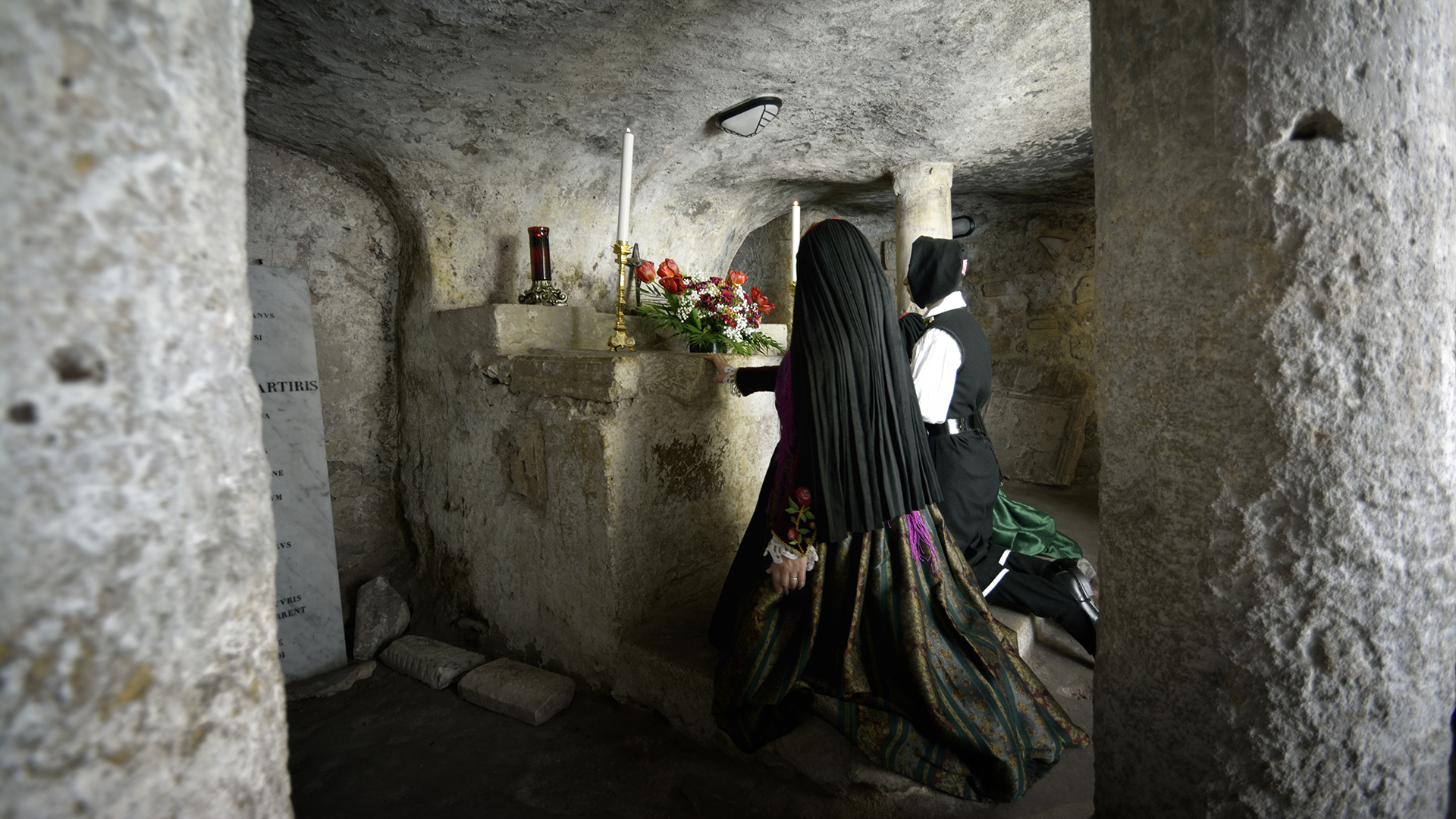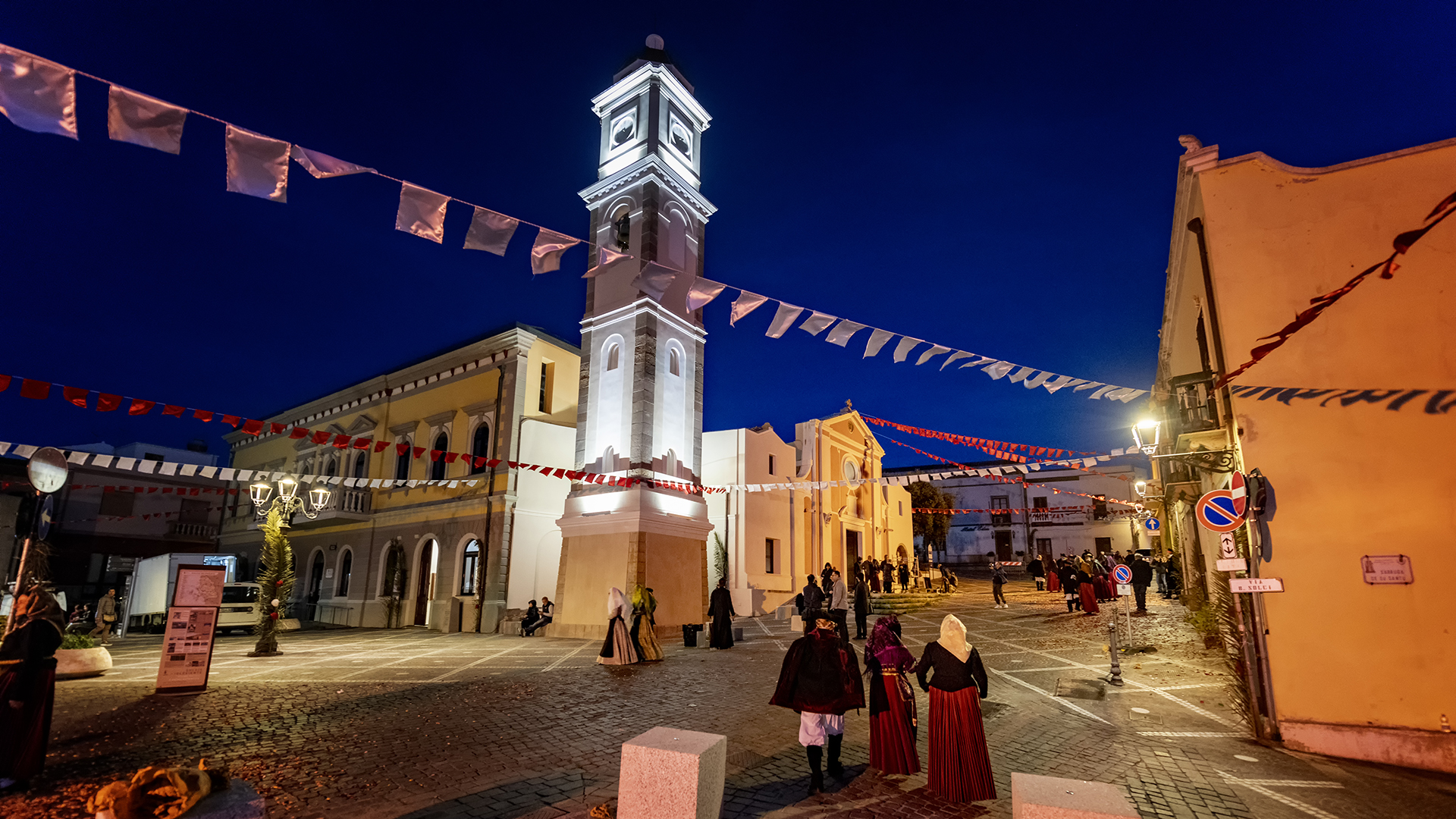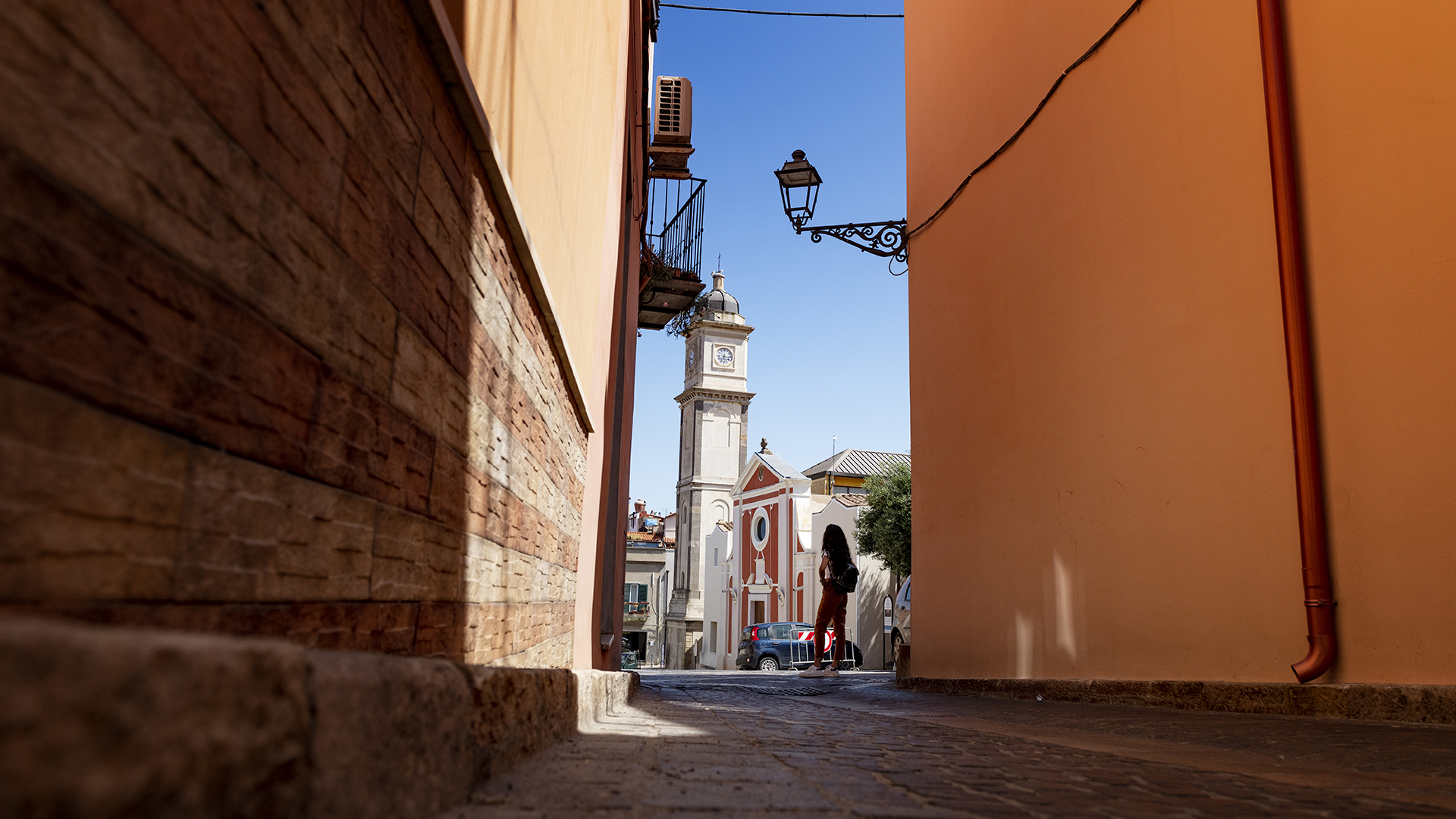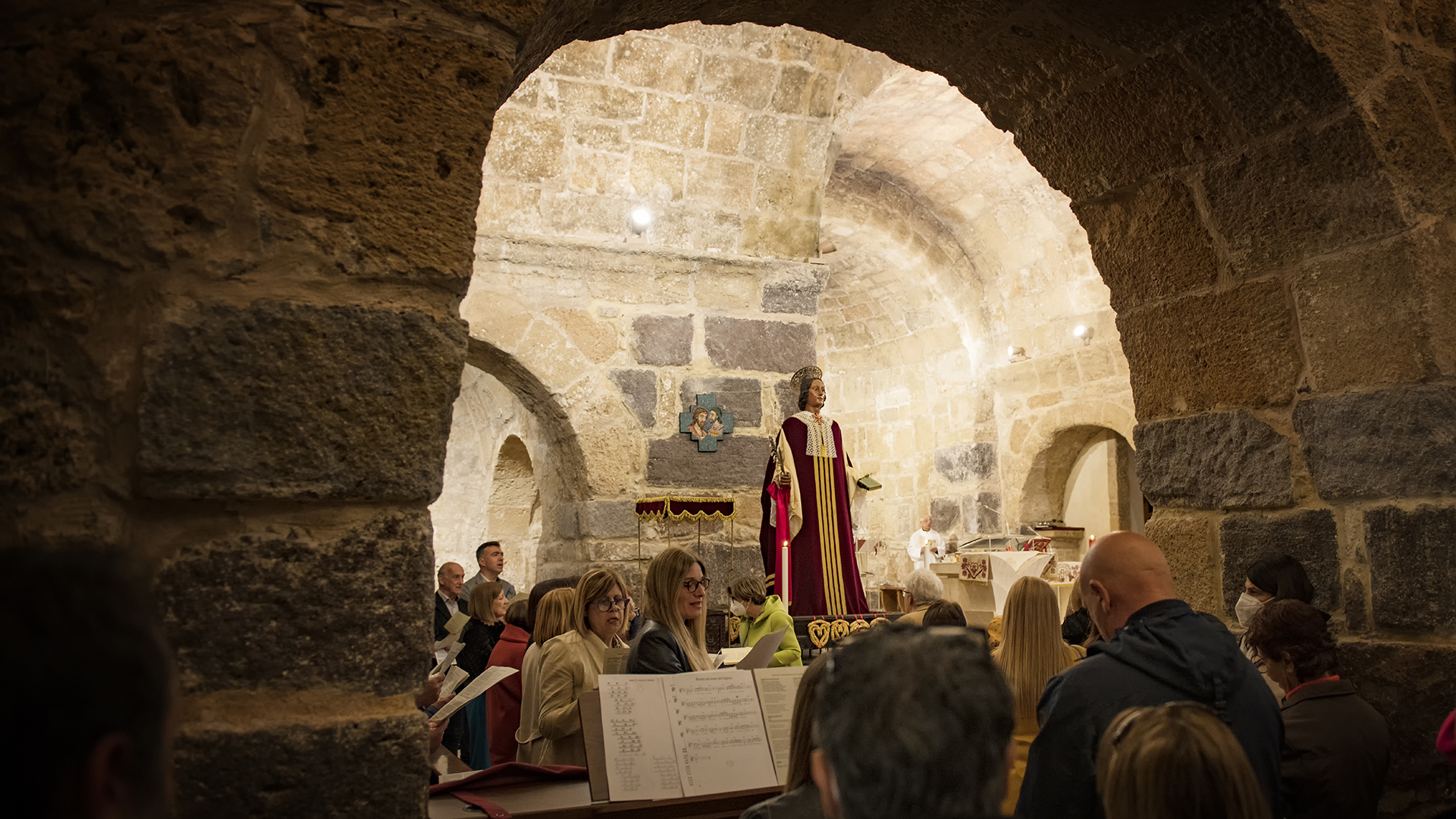
Faith, tradition and culture are carved into the stone of the Basilica and the Catacombs of St Antiochus Martyr. Over the centuries, entire generations have handed down the devotion to the Saint, making these places the fulcrum of Christianity in Sardinia.
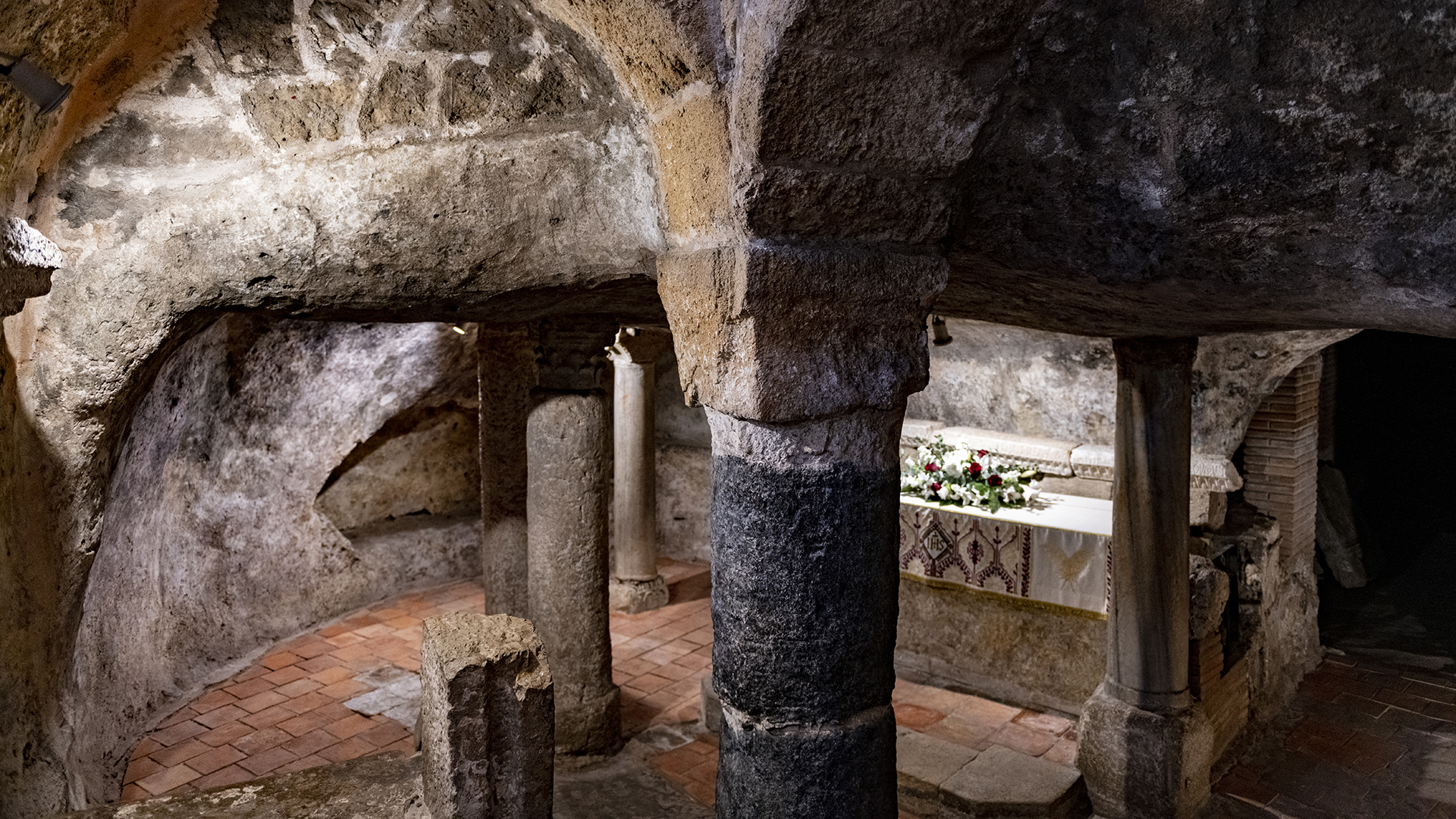
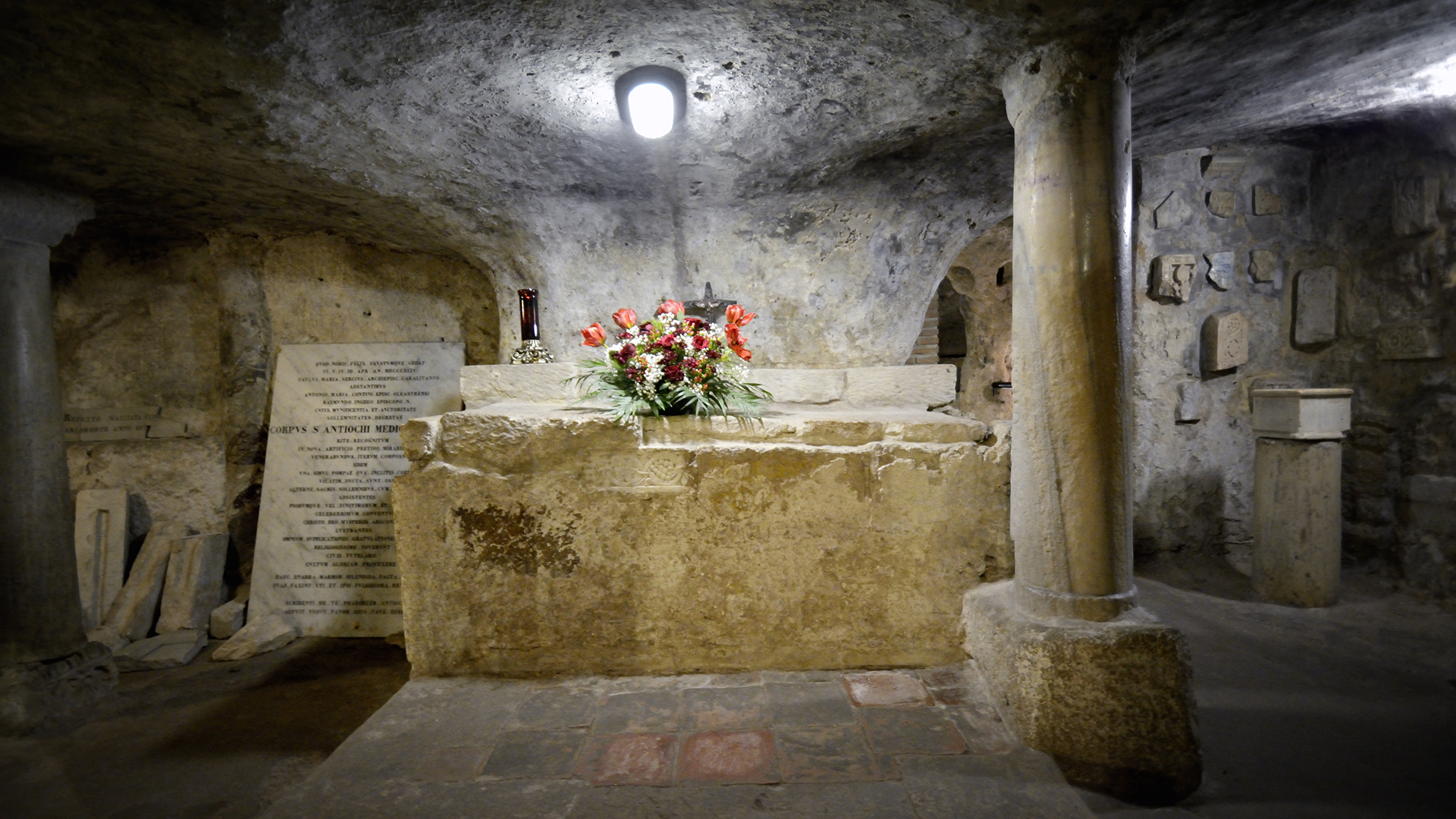
La Catacomb, unique in the whole of Sardinia, was adapted from five tombs of the vast Punic necropolis dating back to the 6th century BC. In fact, after the Saint's death in 127 A.D., the Christians, wishing to be buried around him, modified the original nucleus to create their own cemetery, used until 500 A.D. At the entrance, you can see the tomb that guarded the Saint's body from 127 A.D. until 1615still today a place of worship and prayer for pilgrims and tourists. No less important are the other types of burials found here: arcosoli, pits on the floor, loculi carved into the walls and a rare canopied tomb characterised by large pillars rising to the ceiling.
La Basilica of St Antiochus Martyr has ancient origins dating back to at least the Byzantine era, around the 6th century A.D. The first building was presumably a small early Christian complex leaning against the martyr saint's catacomb. In the 6th century, a major restoration in the Byzantine-Justinian style took place.
La first documented mention of the basilica as the Monastery of Sant'Antioco dates back to 1089when it was donated to the Benedictine monastery of St Victor in Marseille. The original building had a Greek cross plan, with a central domed 'dado' from which four barrel-vaulted arms branched off.
In the course of the 12th century the basilica underwent a lengthening of the nave which transformed the Greek cross into a Latin cross, with an East-West orientation and the creation of an apse and an apsidal side chapel. In 18th centurywith the repopulation of the island, the basilica was further expanded and a new Baroque façade in 1772.
In last decades of the 20th century interventions were carried out restoration to restore the church to its original appearanceremoving plasterwork and Baroque furnishings. The building is constructed of trachyte blocks and retains sculptural elements such as the dome supported by an octagonal drum decorated with symbols of turtles and lion paws, symbols of apotropaic and Christological value.